
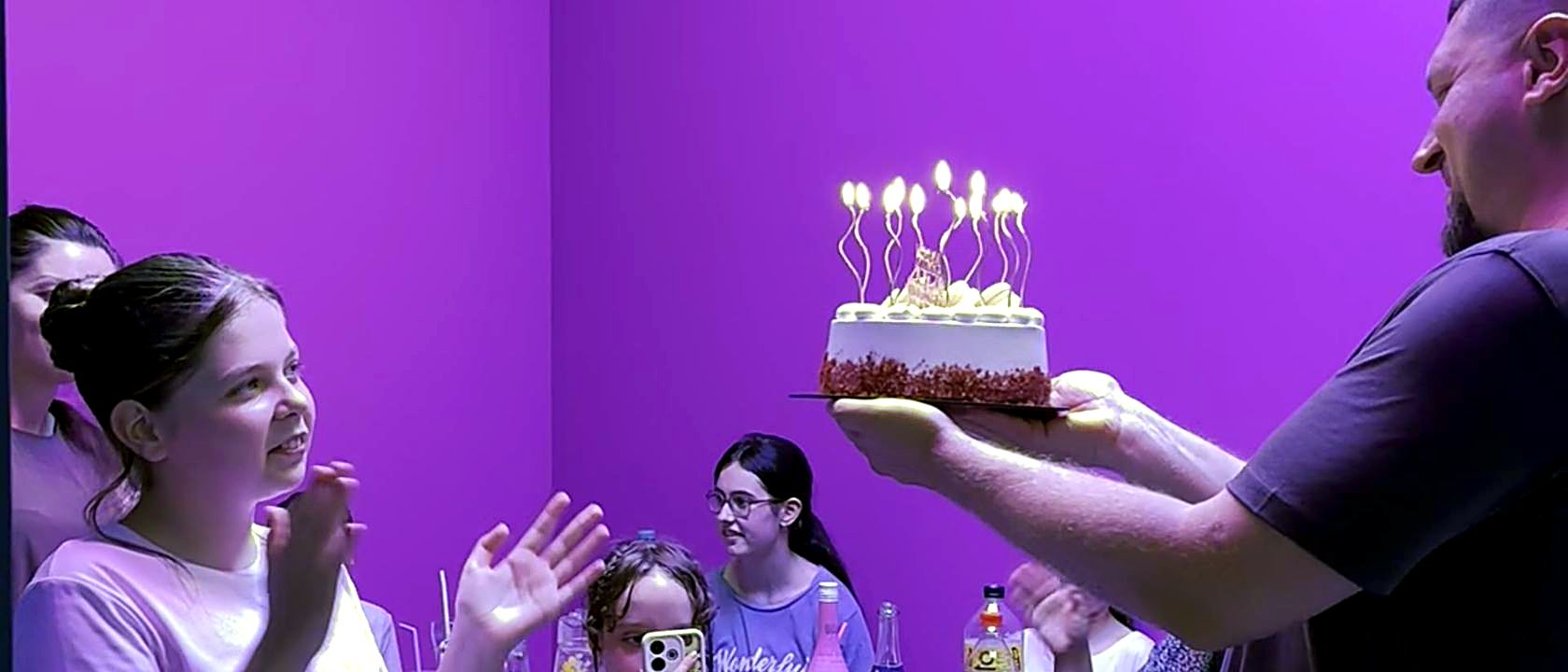
For a child's birthday in Chișinău, the venue should be chosen by age rather than by budget: a space designed for four-year-olds bores a twelve-year-old, and an intense activity exhausts a preschooler in 40 minutes. In short, ages 3 to 6 need a small, safe room and an adult running the game; ages 7 to 10 need movement and team competition; ages 11 to 14 need something that photographs well; from 15 up, they need more freedom and less programme. This guide takes each band in turn, with realistic durations, guest counts and budgets. The only exact prices here are our own, at Hai Pixel, the first interactive LED-floor venue in Chișinău; for other venues we stay qualitative, because their rates change often. If you want the ranked comparison of venue types instead, read our separate guide on where to celebrate a child's birthday; this article is the planning half. Packages, free slots and booking for a kids birthday party in Chișinău at Hai Pixel are on one page.
The short answer, by age
If you have to decide today, the table below covers most situations.
| Age | What works | Realistic length | What fails |
|---|---|---|---|
| 3 to 6 | A small room with soft play, an adult leading the games, simple decor | 90 minutes | Long programmes, complicated rules, groups over 12 kids |
| 7 to 10 | Physical team activity, a visible score, cake in the middle of the party | 2 hours | Venues where kids only sit at a table, themes aimed at toddlers |
| 11 to 14 | A new, photogenic experience with real competition and no entertainer | 2 hours | Themed rooms with costumed characters, prize games for little kids |
| 15 and up | One short, intense activity, then food and free time | 2 to 3 hours | Minute-by-minute schedules, anything resembling a school show |
The rule that ties every row together: the older the child, the less the decor matters and the more the content does. At four, the unicorns on the wall are the party; at twelve, they are the reason your child refuses to be photographed.
Ages 3 to 6: a small room, a slow pace, one adult in charge
At this age a child holds attention on a single activity for 15 to 30 minutes, and kids still play next to each other rather than with each other. You do not need a lot of space, you need controllable space: one room you can see end to end, soft surfaces, a toilet nearby, and somewhere to put fifteen small coats.
Pick a classic play centre with slides and a ball pit, a private room at a place with a kids corner, or a garden in season. Ask three things when you book: whether the room is exclusively yours, whether parents have somewhere to sit with a clear view, and whether you can get in 20 minutes early to decorate.
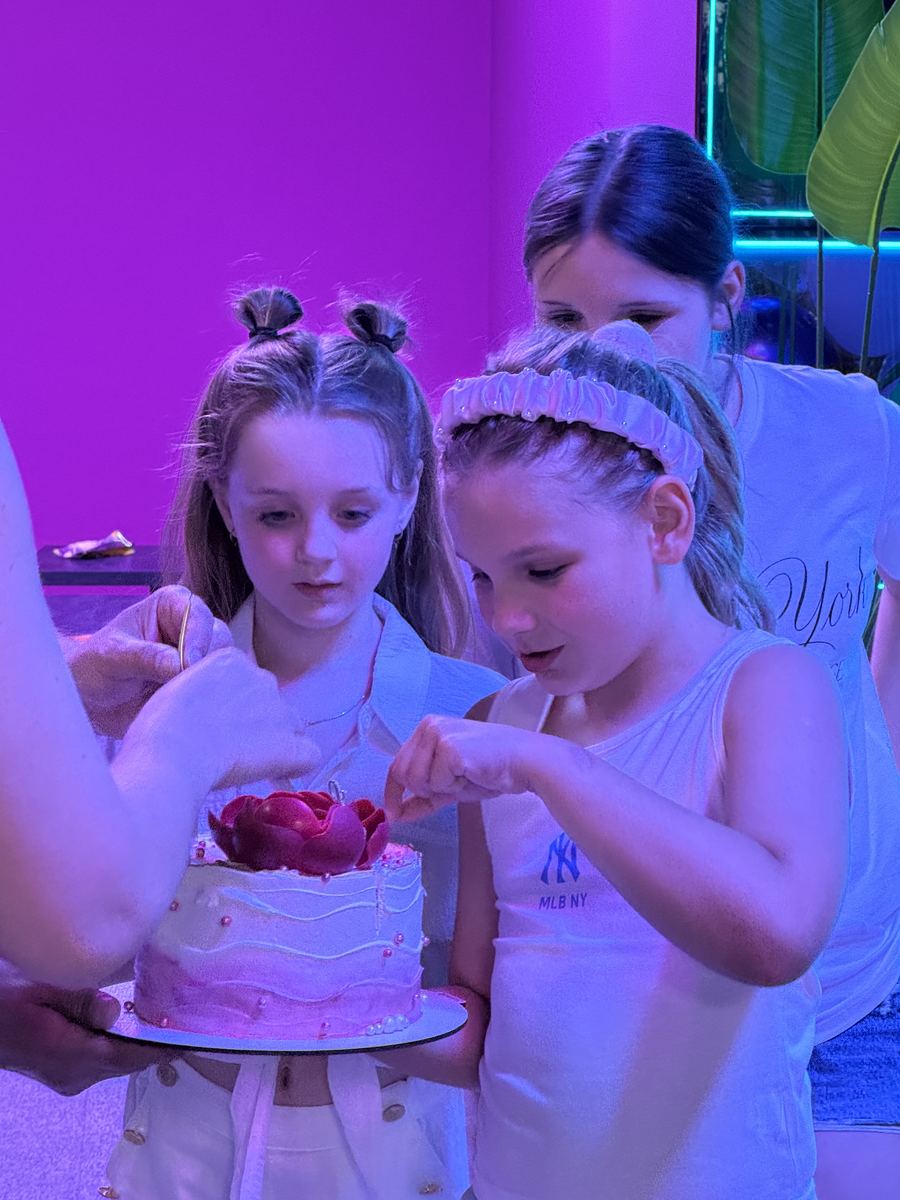
The hour matters more than the venue: late morning or straight after the afternoon nap. A party starting after 5 PM at this age almost always ends with one exhausted child and one parent leaving early. Keep it to 90 minutes, bring out the cake around 45 minutes in rather than at the end, and keep the guest list short.
Honestly, at ages 3 to 6 an LED floor is not our first recommendation. Hai Pixel packages have no age limit, but under six children tend to run across the lights rather than follow the rules. If the whole group is four or five, a classic play space will give you a better party.
Ages 7 to 10: the age where movement solves almost everything
This is the easiest band to organise and the one people get wrong most often, because parents keep booking the format that worked when the child was five. At 7 to 10 a child understands a simple rule, wants to win, handles losing if the next round starts quickly, and has two hours of energy in reserve. All you have to do is give them a reason to run.
Anything with teams and a visible score works: a bowling alley, a trampoline park, a laser tag arena, an interactive LED-floor session. What does not work is a long table at a restaurant: eight-year-olds sit for exactly as long as the main course lasts, then get up, and if you have nowhere to send them the party turns into a chase across the room.
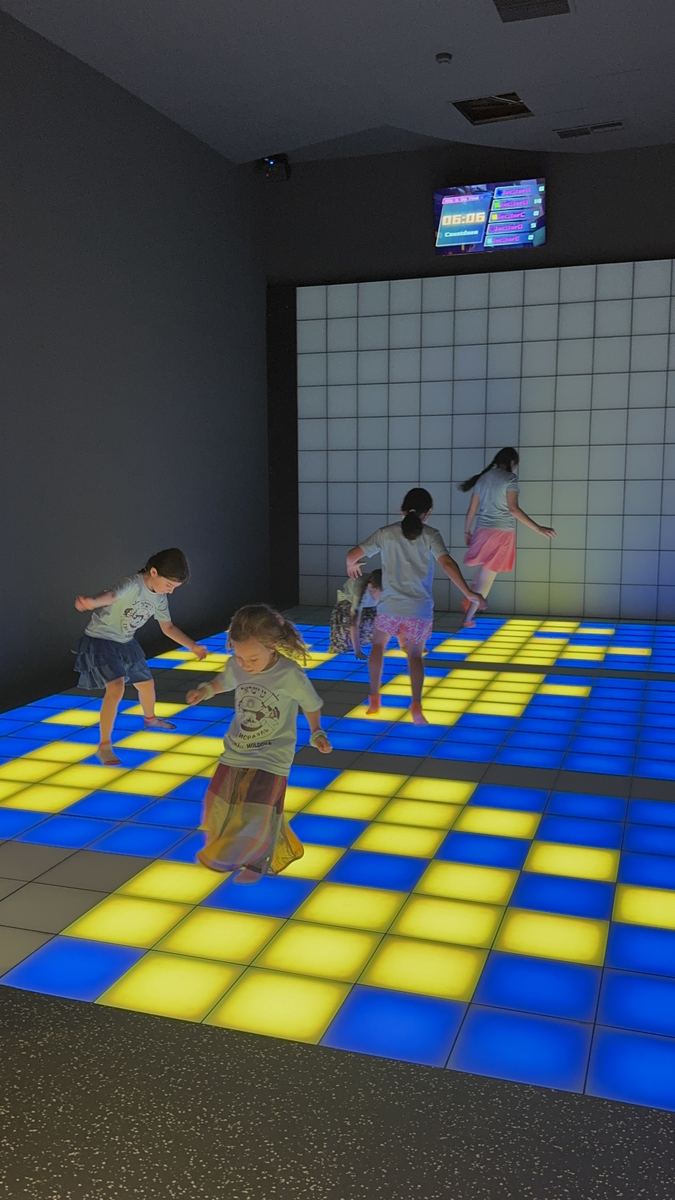
Short rounds are the secret. At Hai Pixel a round runs 2 to 3 minutes, the score appears on the wall monitor, and then the game changes. Out of more than 30 movement games, a two-hour session usually gets through 12 to 18, which means no child has time to get bored. Kids who are not normally first at sports do well here: many games reward reflexes and attention rather than strength.
The ideal group is 8 to 16 children. Below eight the competition fizzles; above sixteen you need one extra adult keeping track of coats and toilet trips. With us, up to 8 players use one floor, 9 to 16 open a second, and 17 to 24 play across three, so nobody queues.
Ages 11 to 14: everything goes through the photo test
From eleven, the real selection criterion stops being fun and becomes how the place looks in a photo sent to the class group chat. Ignoring it risks a party where ten teenagers sit on their phones no matter how expensive the menu was. Themed rooms with characters, costumed entertainers and small-prize games fail this test instantly.
What passes: an escape room for a small group, a karting track, a laser tag arena, an LED-floor session with a live leaderboard, a workshop where they leave with something they made. The common thread is real competition between them, with no adult announcing contests: at this age an entertainer does not help, it gets in the way.
The activity also has to beat the phone. A game that lasts 2 to 3 minutes and ends with a publicly displayed score does exactly that: nobody reaches for a phone between rounds, because between rounds they are arguing about the result. The format that works most consistently is intense activity first, food second. Consider the group mix too: at twelve, groups are often mixed, and a neutral format where everyone plays the same game and loses the same way is the only one nobody objects to.
Ages 15 and up: less programme, more freedom
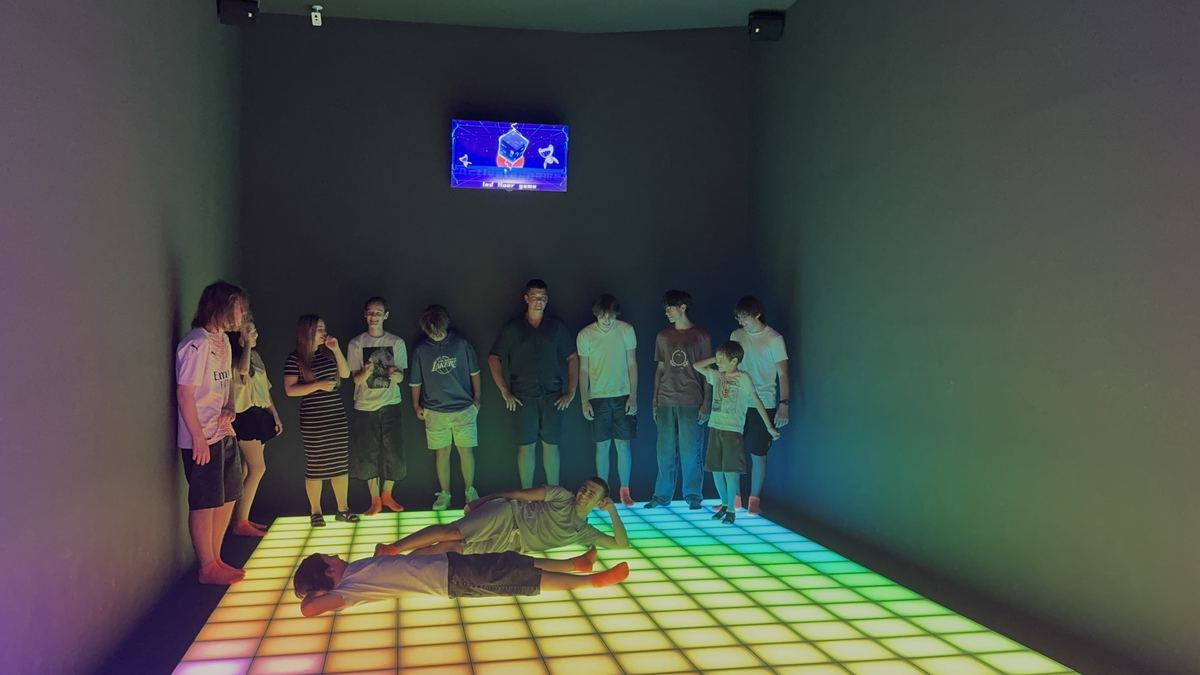
From fifteen, the best party is the one where the organiser is least visible: an hour or two of intense activity at the start, then food, music and free time in a space that belongs to them. Any minute-by-minute schedule collapses within the first 20 minutes, so do not write one.
In practice that means booking the activity separately and having somewhere the group can stay afterwards. A restaurant with an events room, a terrace in season or somebody's house works for part two, as long as part one is something they do not do every weekend.
Our birthday packages have no age limit, and a good share of bookings are for teenagers, students and adults. Same games, different level of competitiveness: at sixteen, groups almost always ask for the extra hour. If the birthday guest is between 11 and 16, we also have a dedicated guide to teenage parties.
The timeline of a two-hour party that actually works
The same structure holds from age seven up, whatever the venue. For little ones, cut everything down to 90 minutes.
- Minus 20 minutes: you arrive, put up the decorations and hand over the cake and drinks. Ask for this window when you book, do not assume you have it.
- 0 to 15 minutes: arrivals. Nobody comes on time, so you need a free-form activity that can be interrupted at any moment.
- 15 to 60 minutes: the main active block. This is where the energy gets spent and the best photos happen. Do not interrupt it for speeches.
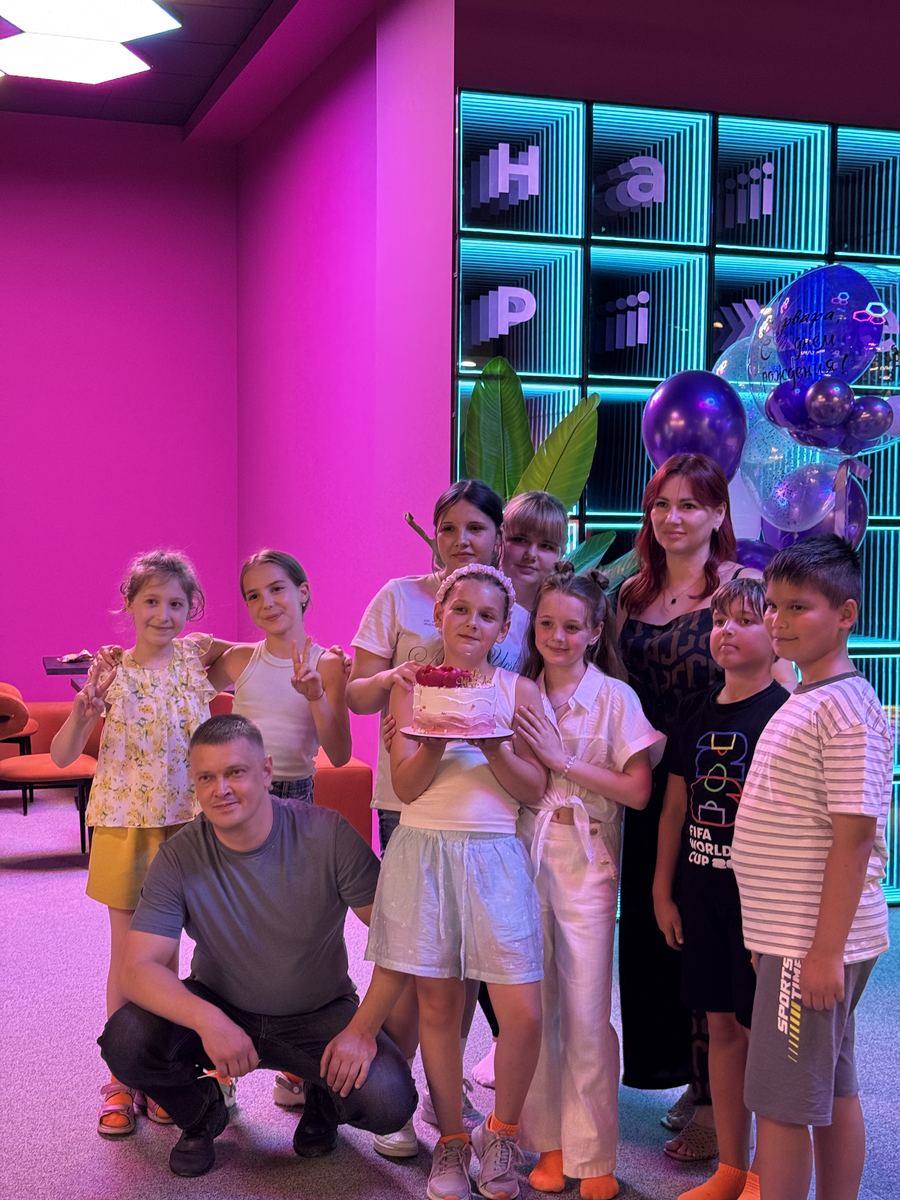
- 60 to 75 minutes: cake, candles, presents. The calm moment falls naturally in the middle, when everyone wants to sit down.
- 75 to 110 minutes: the second active block, shorter and more relaxed. With larger groups, put the team games here.
- 110 to 120 minutes: final rounds, group photo, collecting coats. Announce the ending 10 minutes ahead, otherwise leaving takes another half hour.
The classic mistake is saving the cake for the end: parents start arriving 15 minutes before the stated finish, and the main moment gets spent in front of half a room.
How many guests, really
The invite list and the actual turnout are two different numbers. Invite a whole class and attendance is usually below the confirmed count; invite a small group and you instead get siblings, cousins and one parent who stays. Plan up rather than down, and ask what happens if two extra children show up.
Accompanying adults are the second forgotten variable. At 3 to 6, nearly all the parents stay and you need chairs for them; at 7 to 10, two or three remain; from eleven, most kids get dropped at the door. Always ask whether adults enter free and have somewhere to sit: ten parents standing in a small room change the atmosphere.
At Hai Pixel, a normal session runs with 2 to 24 players. The number of floors adjusts automatically: up to 8 players, one floor; 9 to 16, two; 17 to 24, three. For groups of 25 to 60 we arrange custom events by phone. The birthday packages follow the same logic: up to 8 guests, up to 16 (with a hard cap at 18), and up to 50.
Budgets: small, mid and large
We do not publish prices for other venues: they change often, differ from room to room, and a wrong figure costs you time. Ask for a quote by phone and always ask the same four questions: what the price includes, how long the slot runs, what happens if more children turn up, and whether you can bring a cake from home.
- Small budget: one paid activity, everything else at home. A weekday at midday is almost always the cheapest option anywhere in the city.
- Mid budget: activity plus table space in the same place. Best value, because it removes moving the group from one location to another.
- Large budget: a full package with private space, catered food and decor. It starts making sense from roughly 20 guests up, when logistics cost more than the fun.
Our own numbers, as a concrete reference. Birthday packages last 2 hours, include the LED floor and the private celebration area, and have a fixed price per group: Party up to 8 guests 3000 MDL Monday to Thursday and 3500 MDL Friday to Sunday, Grand Party up to 16 guests 5000 or 6000 MDL (hard cap 18, with 250 MDL for each guest above 16), and Festival up to 50 guests, 8000 MDL every day up to 24 guests, then 9500 or 11000 MDL from 25 guests. If you do not want a package, a plain session for 2 people starts from 300 MDL per hour on weekday daytimes, from 400 MDL on weekday evenings and from 440 MDL at weekends, and a two-hour session costs about 1.85 times a one-hour one. Anti-slip socks are 30 MDL, and snacks, pizza, cake and an extra hour are added separately. The full grid is on our prices page.
A worked example: 12 nine-year-olds on a Saturday afternoon
A real scenario, with our own figures, so you can see how the options compare. A group of 12 children, Saturday, two hours.
| Option | Total | Per child (at 12) | What it includes |
|---|---|---|---|
| 1-hour session, weekend, 12 players | 2040 MDL | 170 MDL | Game only, no private area. Good before eating elsewhere. |
| 2-hour session, weekend, 12 players | 3770 MDL | 314 MDL | Play across two floors, no private celebration area. |
| 2-hour session, weekday daytime, 12 players | 2590 MDL | 216 MDL | The same session, in the cheapest slot of the week. |
| Grand Party package, 2 hours, Saturday | 6000 MDL | 500 MDL | LED floor plus the private celebration area, up to 16 guests included. |
How to read the table: if exactly 12 children turn up and you have somewhere to do the cake afterwards, the two-hour weekend session is the lowest cost per child. If you want cake, presents and food in the same place, the Grand Party package costs 2230 MDL more at 12 guests on a Saturday (Monday to Thursday the package is 5000 MDL), and that money buys two hours of private space.
The gap changes dramatically with headcount, because the package has a fixed price and the session does not. At 16 guests, the two-hour weekend session is 4440 MDL while Grand Party at the weekend is 6000 MDL: for 1560 MDL more you get the private area, which works out at 375 MDL per child. The closer your group sits to the package cap, the better value the package becomes.
What a Hai Pixel party actually involves
Hai Pixel, the first interactive LED-floor venue in Chișinău, is in Grand Hall, bd. Constantin Negruzzi 2/4, second floor, and has been open since June 2026. The floor covers roughly 360 m² and is pressure-sensitive: it reacts to every step, and more than 30 movement games run on it, from races to memory and reaction challenges. The score shows live on the wall monitor, and rounds last 2 to 3 minutes.
You play in socks; if you forgot yours, anti-slip socks cost 30 MDL. The birthday package runs two hours and covers the game plus the private celebration area, where the cake, presents and coats go, and you can add snacks, pizza, cake or an extra hour on top. You do not need an entertainer: the game runs the party by itself.
We are open daily from 10:00 to 22:00, we speak Romanian, English and Russian, and our Google rating is 5.0. Book on our booking page or call +373 79 238 617, and the full package details are on the birthday party page. We also have gift cards.
When Hai Pixel is not the right answer
It is not a universal venue. We do not recommend it if the whole group is under six, because the games rely on a rule being understood and followed. We do not recommend it if the birthday child wants a themed party with a costumed character and a fairy-tale set, because we do competition, not storytelling.
It is also not right if the group includes children who cannot run, for whom the activity becomes a spectacle rather than participation. And it makes no sense above 50 guests, which needs a conventional events hall anyway. For two or three children, a birthday package is overkill: take a plain session and do the cake at home.
When to book: the calendar year
Demand is not evenly spread. Saturday afternoon is the single most requested slot of the week, so book it three or four weeks ahead. For weekend mornings or weekdays, one or two weeks are generally enough.
The seasonal peaks deserve separate treatment. The run-up to 1 June, the end of the school year in May and June, and December all fill first; for those windows, six weeks of notice is not excessive.
A budget tip: if the birthday falls on a Tuesday or Wednesday, celebrate on the day. School-age children are free after lessons and weekday midday sessions are the cheapest slots in the grid. With a birthday package, though, the day makes no difference to the price.
Six mistakes that spoil the day
- Choosing the venue for your age, not your child's. A parent books a place that is lovely for adults, and the children are bored in 20 minutes.
- Sending invitations without a finish time. It is the part parents read most carefully; without it, the leaving stretches out.
- Not asking what the package includes. Check item by item: cake, balloons, decor, adult entry, setup time before and clear-up time after.
- Inviting too many children for the space. A big group in a small room is not a better party, only a louder one.
- Filling the whole programme with activities. Children need 15 or 20 minutes of downtime in the middle; without it, the last half hour turns chaotic.
- Booking without confirming the final headcount. Tell the venue two or three days ahead how many children are actually coming; most capacity problems get solved in that phone call.
If you are planning further ahead, keep reading: the guide for ages 5 to 7, the six themes and how to run them, what happens at a party, step by step, the age by age guide to the interactive floor and the winter birthday guide.
Frequently asked questions
What is the best format for a 10-year-old's birthday in Chișinău?
At ten, the best format is a physical team activity with a visible score and short rounds, followed by cake. An LED-floor session, a trampoline park, bowling or laser tag all fit. What does not work is a long restaurant table or a themed room aimed at toddlers. The ideal group is 8 to 16 children, and two hours is almost always enough.
How much does a birthday party at Hai Pixel cost?
Packages run 2 hours, include the LED floor and the private celebration area, and have a fixed price per group: Party, up to 8 guests, 3000 MDL Monday to Thursday and 3500 MDL Friday to Sunday; Grand Party, up to 16 guests, 5000 or 6000 MDL, with a hard cap of 18 and 250 MDL per guest above 16; Festival, up to 50 guests, 8000 MDL every day up to 24 guests, then 9500 or 11000 MDL from 25 guests. Snacks, pizza, cake, anti-slip socks (30 MDL) and an extra hour are added separately.
Is there an age limit on the birthday packages?
No. The packages are booked the same way for children, teenagers and adults. In practice the games work best from about six or seven up, when a child follows a simple rule and runs independently. For groups made up entirely of four- and five-year-olds, a classic play space is the better choice.
What kind of party suits each age?
Ages 3-6: a small room, a soft play area and an adult leading the game, about 90 minutes. Ages 7-10: physical team activity, a visible score and the cake in the middle, 2 hours. Ages 11-14: a new, photogenic experience with real competition and no entertainer, 2 hours. Ages 15 and up: a short, intense activity, then food and free time, 2-3 hours.
What does a successful 2-hour kids' party look like?
0-15 minutes: arrivals, with a free activity. 15-60 minutes: the main active block, no speeches. 60-75 minutes: cake and presents in the middle, when everyone wants to sit down. 75-110 minutes: a second, shorter active block with team games. 110-120 minutes: last rounds and the group photo, with the end announced 10 minutes ahead. The classic mistake is leaving the cake to the end.


