
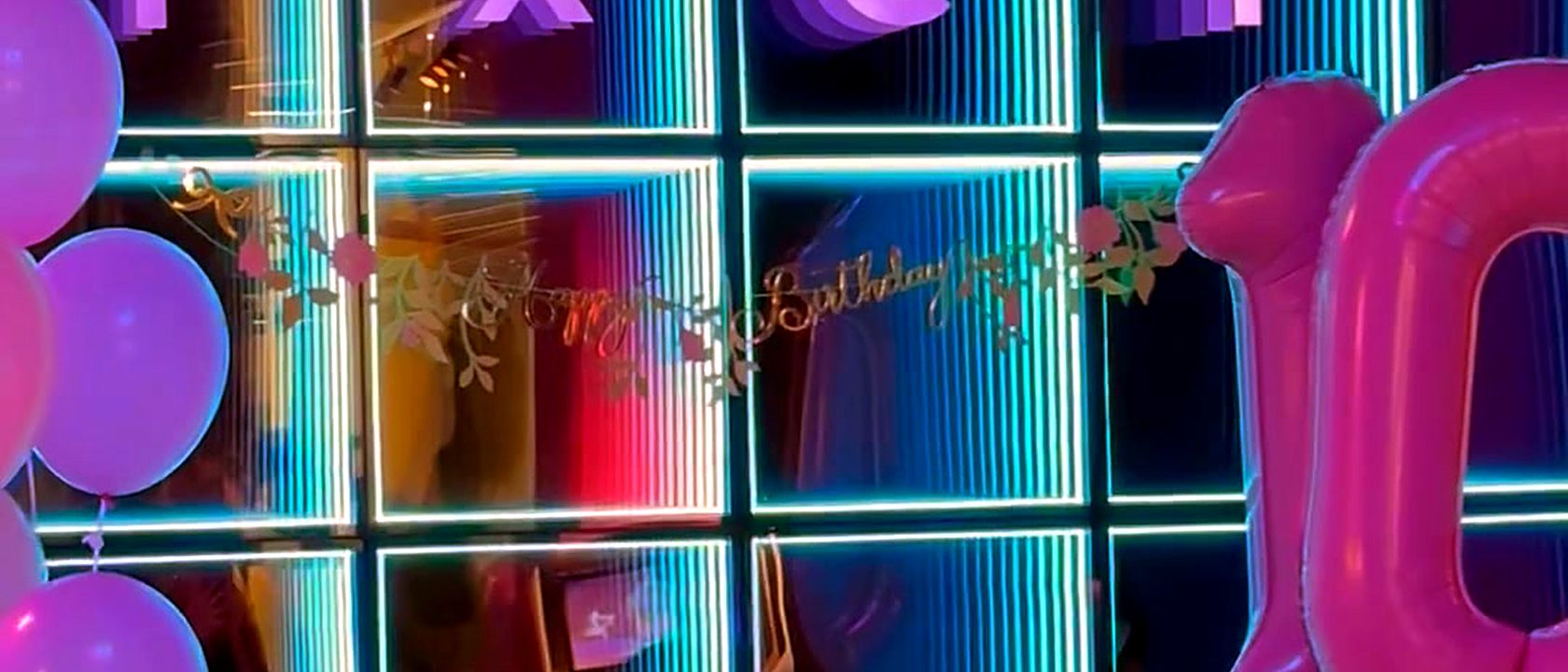
The kids' party themes that work in Chișinău in 2026 are the ones that use the space itself, not just the decorations: neon glow, gamer, disco dance, superheroes in motion, the science of light, and the classics reinterpreted. At Hai Pixel, the first interactive LED-floor venue in Chișinău, the first five themes practically build themselves, because the 360 m² floor and the LED wall become the decor, the lighting and the activity programme all at once. The guide below takes each theme in turn, with dress code, cake, music and games, plus an honest verdict on where each one works best, because not every theme needs the same kind of space.
How do you choose the right theme for your child?
Three short questions pick the theme better than any inspiration board. One: what does your child love now, this month, not what they loved at last year's party? Passions change fast at party age, and a theme imposed by parents is spotted instantly. Two: what does the guest group look like in motion? If at the last few parties the kids ran until they dropped, pick an active theme; if they prefer building, drawing and storytelling, pick a calm one. Three: where will the party happen? A theme that needs craft tables and daylight has no business in a game hall, and one that lives on light and movement fades out in an ordinary living room.
The table below is the starting point, with the short answer for every theme in this guide:
| Theme | Ages it lands with | Energy | Where it shines |
|---|---|---|---|
| Neon glow | 6-14 | high | a hall with an LED floor and wall |
| Gamer | 7-14 | high | a hall with real games, not screens |
| Disco dance | 5-12 | high | any room with music and lights |
| Superheroes in motion | 4-10 | high | open space to run in |
| The science of light | 6-12 | medium | a dark hall full of LED pixels |
| Princesses, tea, crafts | 4-8 | low | at home or in a classic event room |
If your real question is what fits your child's age rather than their taste, we wrote a separate age-by-age birthday guide for Chișinău that takes every age band in turn. Here we stay on themes: visual identity, dress code, cake, music and activities.
Why does the venue decide half the theme?
A theme has two components: how the party looks and what the guests actually do for two hours. At home, both are built from zero: balloons, a banner, garlands, plus a games programme that somebody has to run non-stop. In a space with programmable light, half of that work disappears. At Hai Pixel, opened in June 2026 inside Grand Hall at 2/4 Constantin Negruzzi Blvd, 2nd floor, the pressure-sensitive floor and the live-score wall are the decor: you pick the theme, and the hall colours itself to match it.
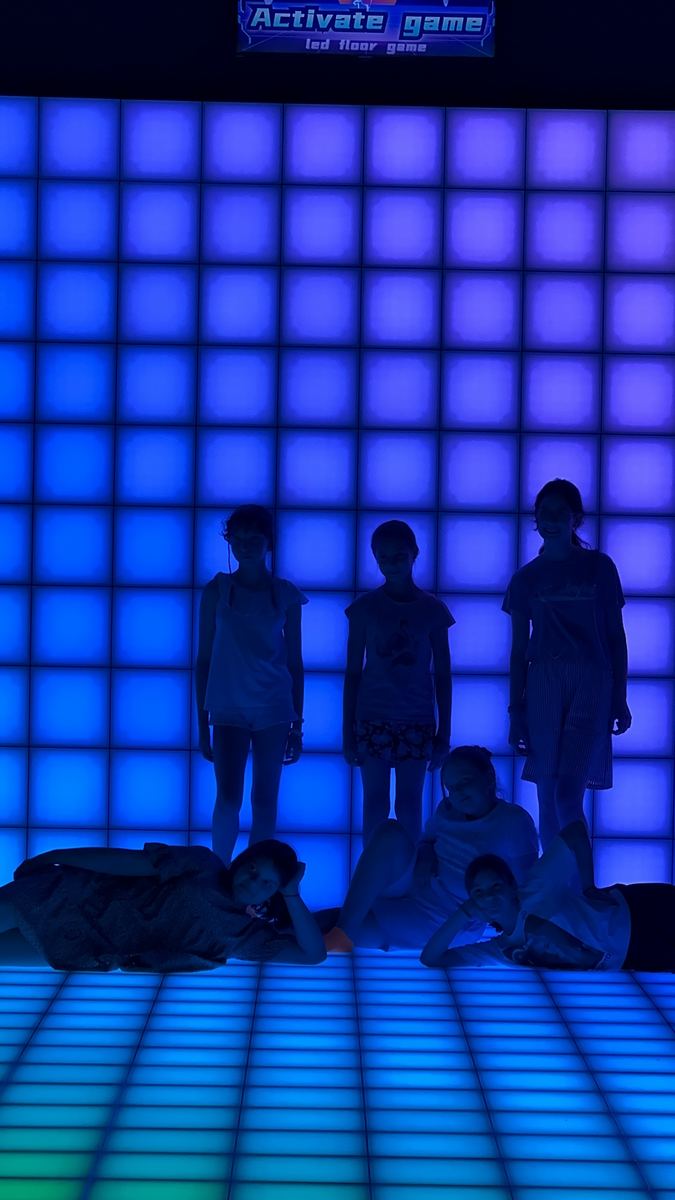
That does not mean every theme automatically moves into a game hall. The honest rule goes like this: themes that live on light and movement (neon, gamer, disco, superheroes) gain enormously from an interactive space; themes that live on objects and handiwork (a princess tea party, painting workshops, slime) need tables, chairs and good light, which is exactly what a living room or a classic event room provides. For every theme in this guide we mark honestly where it works best.
Neon glow party: the theme that lights itself
Neon has the best effect-to-effort ratio in this whole guide, with one condition: you need the light. The concept is simple: a dark hall, saturated colours, clothes that stand out, energetic music. Kids between 6 and 14 adore it because it feels grown-up without being about anything in particular: it does not depend on a character, a film or a season, so it cannot go out of fashion between the invitation and the party.
Dress code: white and fluorescent colours. On the LED floor, white clothes and bright green, pink or orange ones catch the colour of the scenes, and the kids become part of the decor. Hand out glow bracelets at the door: they take thirty seconds to distribute and then show up in every photo. Cake: black or deep blue glaze with neon-coloured drips, or a simple white cake with a light-up topper. Music: current pop plus a few electronic tracks with a clear bass line; at a neon party the beat matters more than the lyrics.
Activities: this is where the theme leaves the home version behind. On the interactive floor, colour-chasing games become the theme itself: kids hunt the lit squares, flee the forbidden colour, defend their team's zone. Rounds last 2-3 minutes, so nobody waits on the sidelines for more than one game. And the group photo has its backdrop ready: the wall of glowing letters.
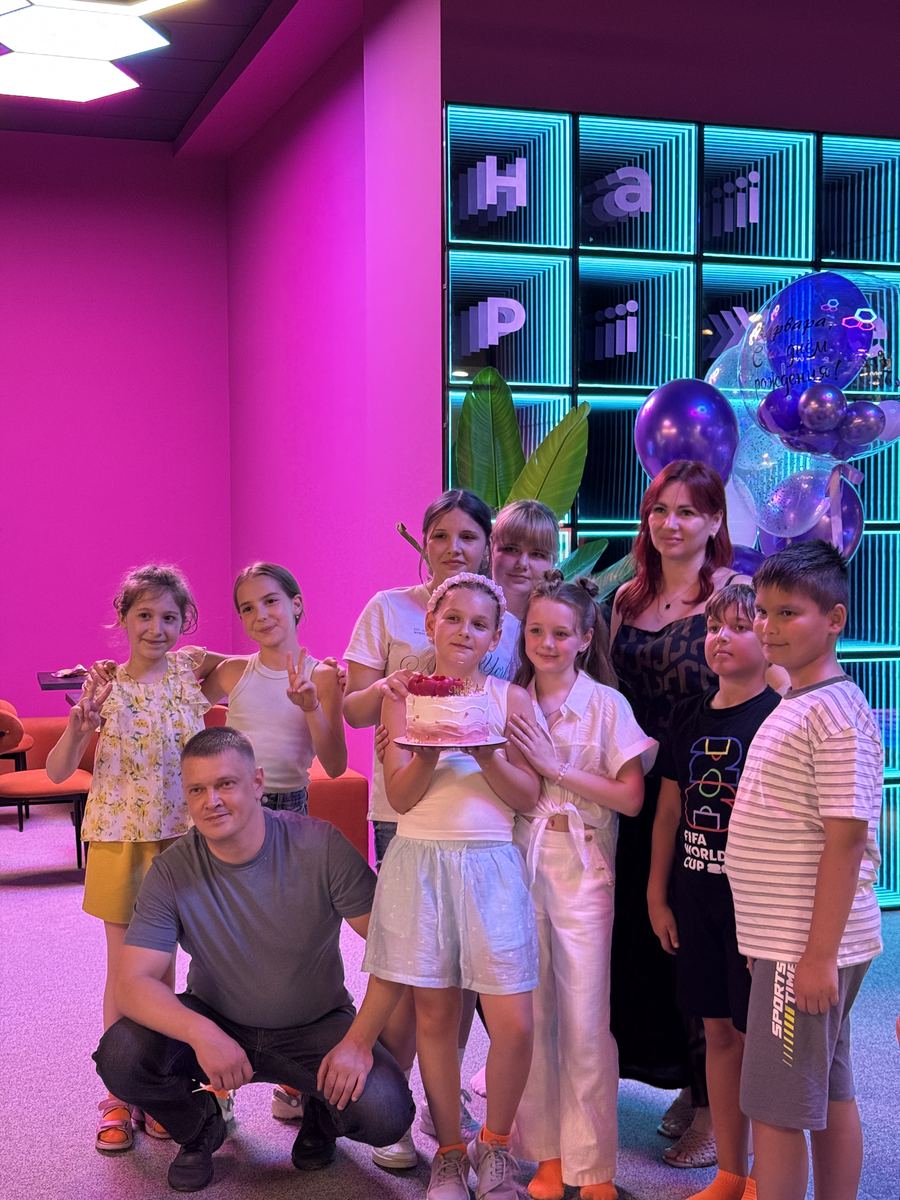
Honest verdict: neon at home is possible, but it takes a real investment in special lamps and fluorescent decor, plus a room that goes fully dark in the middle of the day. If the whole theme budget would go on lighting, it is simpler to pick a hall where the light already exists and spend on the cake and the guests instead.
Gamer theme: the party inside the game
The paradox of home gamer parties: the birthday child loves games, so the parents put a console in the middle of the room, and the result is a party where two kids play and eight kids watch. The version that works flips the logic: the kids do not watch the game, they step inside it. At Hai Pixel, the 30+ movement games run on the floor and the wall: reflexes, speed, memory, duels and co-op rounds, with the score displayed live, like a real tournament.
The tournament format is the key to this theme. Split the guests into teams with coloured t-shirts or bandanas, announced in the invitation itself, and build the party as a series of scored challenges. Game sessions run from 2 to 24 players, and the space grows with the group: up to 8 kids play on one floor zone, 9 to 16 on two, 17 to 24 on three. Three zones means three teams playing simultaneously and rotating between challenges, so there is zero dead time and no child stuck on the bench.
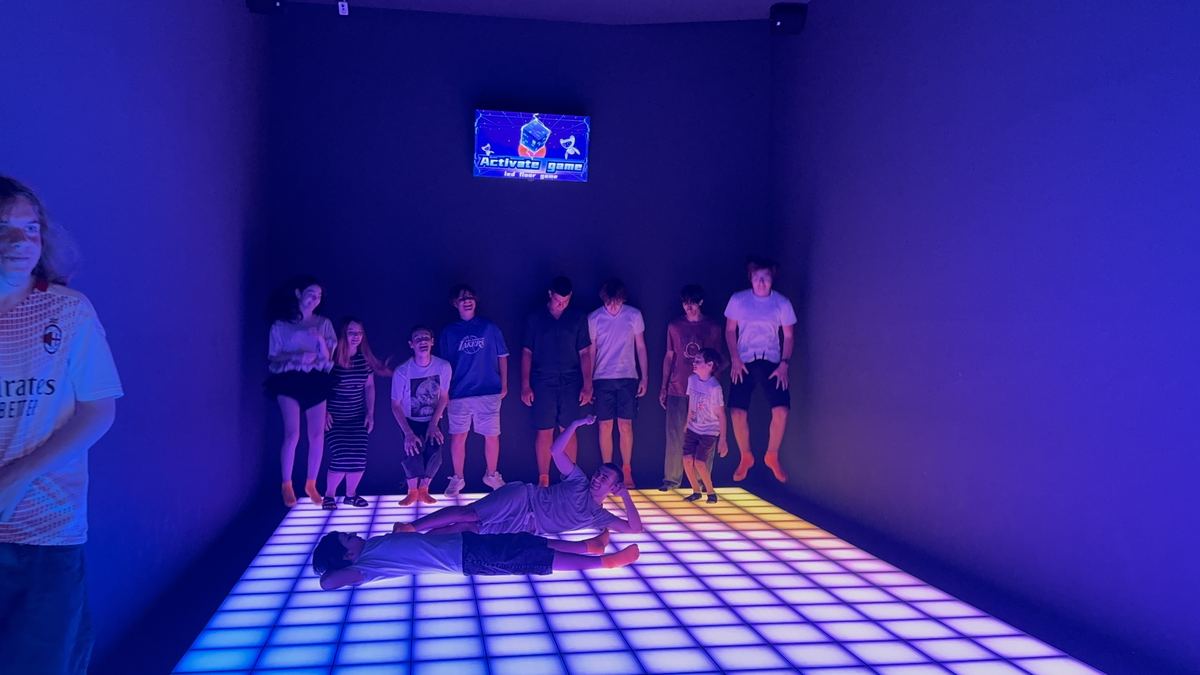
Dress code: t-shirts in team colours, ideally with each player's gamer tag on the back. Cake: pixel or 8-bit style with squares of coloured chocolate; it is one of the easiest briefs you can give any baker. Invitations: press-start style cards that tell each guest which team they have been drafted into. Music: game soundtracks and chiptune between rounds.
Honest verdict: the classic gamer theme, with consoles and a screen, is still the right choice if the birthday child dreams of a tournament in one specific video game, with their favourite title on screen. The LED floor does not run console games; it runs physical games played with the whole body. For kids who want to compete and break a sweat, it is the livelier option; for the superfan of a single video game, tell them clearly beforehand what to expect, so the excitement is theirs and not just the parents'.
Disco dance: the theme that never sits down
Disco is the most forgiving theme on this list: it needs no expensive costumes, excludes nobody, and covers the widest age band, roughly 5 to 12, plus the parents who secretly wanted to dance anyway. Its elements: music the kids actually ask for rather than the parents' playlist, coloured lights, a clearly marked dance floor, and a few musical games run with energy.
The musical games that never fail: freeze dance (music stops, everyone turns to stone), musical chairs without the chairs, using coloured floor zones instead, and team dance battles. On a floor that changes colours with each round, the dance ring marks itself out, and the kids who do not dance get the alternative of scored games instead of standing glued to the wall with a cup in hand.
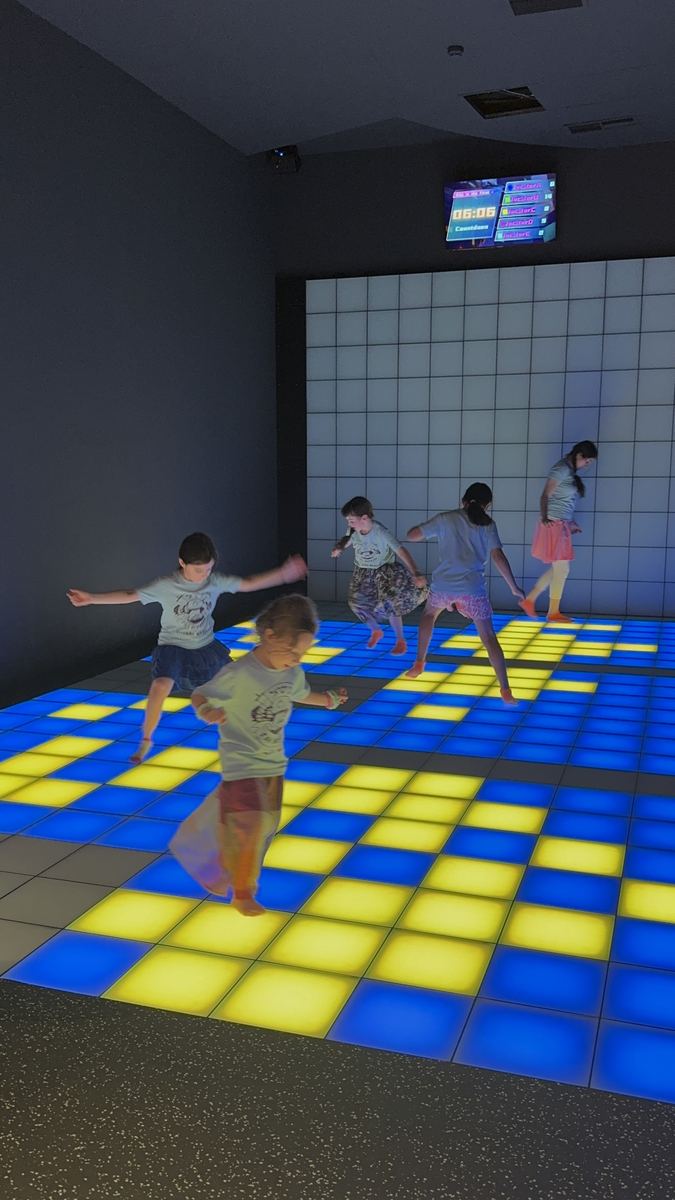
Dress code: glitter, sequins, metallic colours; keep in mind that the floor is played in socks, so the sequin skirt works and the shiny shoes stay at the entrance. Cake: edible-glitter glaze, or simply the child's favourite cake, because at a disco party the cake is not the star. Honest verdict: disco works almost anywhere there is good music and a room cleared of furniture; the interactive hall adds scored games for the non-dancers. If your group is made up entirely of committed dancers, an emptied living room and a good playlist can be enough.
Superheroes in motion: missions, not just costumes
Superhero parties fail in a predictable way: after twenty minutes of photos in costume, nobody knows what to do with their powers any more. The fix is to move the emphasis from the costume to the training: the party becomes a hero academy, with trials to pass and team missions, and the costume goes back to being what it should be, the work uniform.
The trials are built from reaction and speed games, renamed in the language of the theme: save the blue squares before they vanish becomes the rescue mission, dodge the red zones becomes reflex training, collect your team's points becomes the final trial. At ages 4-10, where this theme lands hardest, the leaderboard matters less than the badge: prepare hero diplomas for everyone, not just the winners.
Costumes: short capes and simple masks; the floor is played in anti-slip socks, so no hero boots, and long accessories that get stepped on stay in the celebration area. Cake: stylised emblems and skylines, without licensed characters, so you avoid the debate at the bakery. Music: orchestral film themes for the entrance, then anything that keeps the pulse up. Honest verdict: if your child's dream is one specific character played by a dedicated animator in a professional costume, look for a specialised entertainer service; the hall brings the missions and the energy, not the actors.
The science of light: a theme for curious kids
Some children end up asking how things work at every party they attend. For them, the science-of-light theme turns the hall itself into the subject: how does the floor know where you stepped? How do blue and yellow mix? What exactly is a pixel?
The answers become part of the game: the floor is pressure-sensitive, so every step sends a signal; every square is a pixel mixing red, green and blue; the wall computes and displays the score live. Themed challenges: find the colour that never appears on the floor, predict which scene comes next, count the pixels in a zone before it goes dark. Between challenges, the ordinary speed and memory games keep the energy up, because even the most curious child does not want a full hour of theory.
Honest verdict: this is not a laboratory party. If your child wants experiments with liquids, colour-changing reactions and test tubes, a science workshop at home or in a space dedicated to workshops remains the right choice. The light theme works for the curious kids who understand the world by moving through it, roughly ages 6 to 12, not for the ones who want to sit at a table and mix solutions with a pipette.
Classic themes: princesses, pirates, and where they work better
This is the most honest part of the guide: some themes simply work better at home or in a classic event room, and it is more useful to say so directly than to pretend every theme fits everywhere.
- The princess tea party (ages 4-8): it lives on a beautifully set table, delicate tableware, dresses and a calm rhythm. It needs daylight and quiet. Its place: at home, or in a classic event room with real tables.
- Craft workshops (slime, painting, bracelets): they need work tables, aprons and a spot where mess is not a drama. A game hall is not their place, and there is no point pretending otherwise.
- Pirates and treasure hunts: in summer, in a courtyard or a park, with a hand-drawn map and hidden challenges, this theme is the queen of outdoor parties.
- Animal themes for the very small: under 4, children need small, gentle spaces and their own nap schedule, not a big hall with lights and scores.
The interesting part: every classic theme has a translation into movement language, if the group has the energy. The princess ball becomes a disco with an elegant dress code, the treasure hunt becomes a team race for the golden squares on the floor. And the cake moment stays the same under any theme: the party packages include a private celebration area with a table for the cake, the presents, and the candles blown out with the whole group around.
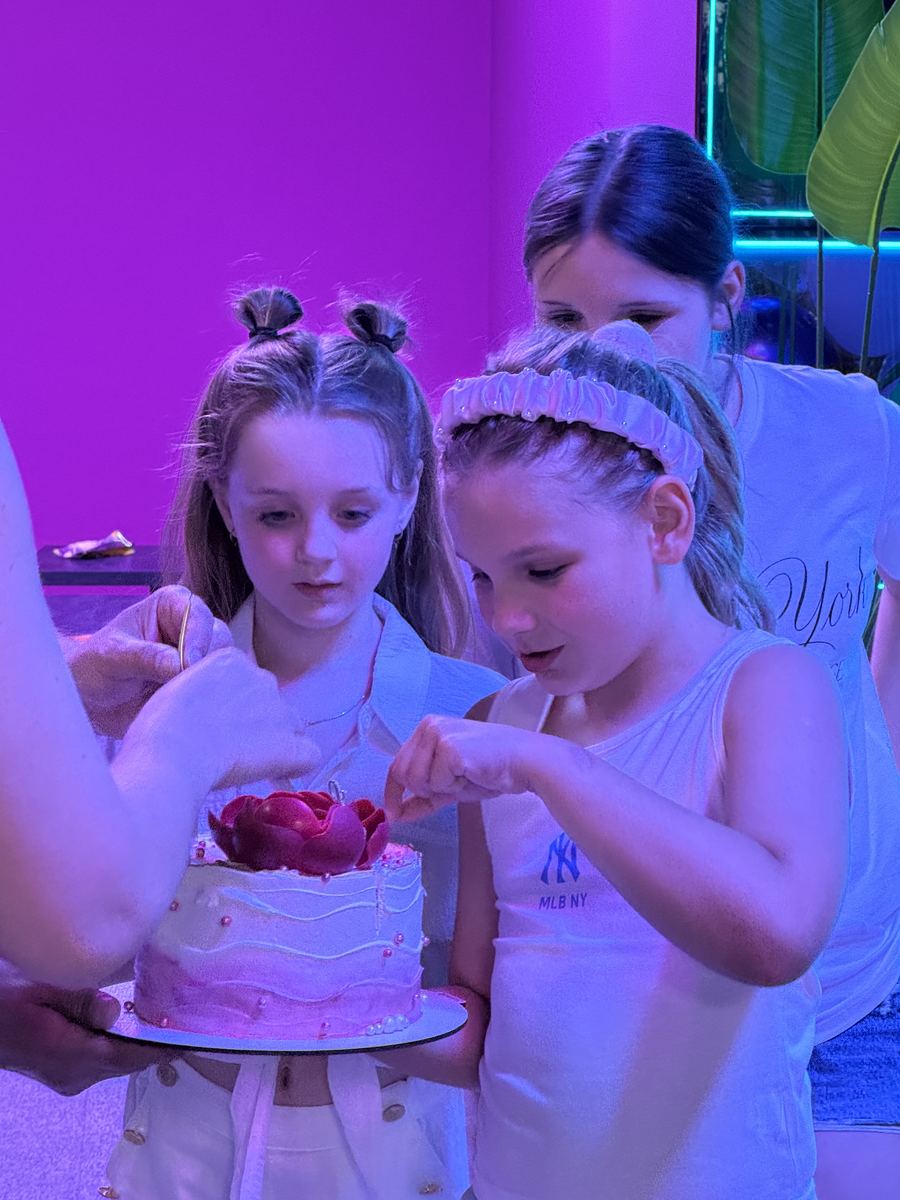
The final selection rule: decide by the dominant activity, not by the picture on the invitation. If most of the party is movement, choose the interactive hall; if it is handiwork and stories around a table, choose the big table and the good light, even if that means staying home.
How much does a themed party at Hai Pixel cost?
Good news for the budget: the theme does not change the price. The birthday packages have a fixed price per group, last 2 hours, include the LED floor and the private celebration area, and have no age limit: Party, up to 8 guests, 3000 MDL Monday to Thursday and 3500 MDL Friday to Sunday; Grand Party, up to 16 guests, 5000 or 6000 MDL, extendable to 18 guests at 250 MDL per extra guest; Festival, 8000 MDL every day up to 24 guests, then 9500 or 11000 MDL for 25 to 50 guests. The full details live on the birthday party page and the current numbers on the pricing page; here we stop at a single worked example.
Say you choose the neon theme for 17 guests:
| Item | Calculation | Cost |
|---|---|---|
| Grand Party, up to 16 guests | fixed price, Mon-Thu (Fri-Sun 6000 MDL) | 5000 MDL |
| The 17th guest | 1 x 250 MDL | 250 MDL |
| Anti-slip socks | 17 x 30 MDL | 510 MDL |
| Total at booking | 5000 + 250 + 510 | 5760 MDL |
On top of that total you only add what you choose: cake, pizza, snacks or an extra hour, at current menu prices. The theme elements themselves (glow bracelets, team t-shirts, the cake topper) come from home, and big decorations are no longer needed, because the hall comes with the light built in. For groups of 25-60 people, events are organised individually by phone at +373 79 238 617.
One last honest tip for small groups: if you do not need the private celebration area, a regular game session can beat the package on price. For 6 kids, 2 hours of play costs 2220 MDL on a weekend or 1550 MDL Monday to Thursday before 16:00, versus 3000 MDL for the Party package Monday to Thursday (3500 MDL at the weekend). One caution though: session prices ramp with every single player, so check the exact figure for your headcount before deciding.
If you are planning further ahead, keep reading: what works for preschool and first grade and the guide for a 10-year-old.
Frequently asked questions about themed parties
Can we bring our own themed decorations?
Yes, you can set up your own decor in the private celebration area: balloons, a banner, a topper, themed tableware. For anything large or installed, call +373 79 238 617 beforehand to confirm what can be mounted safely. On the game floor itself, decor is unnecessary anyway: the light does all the work.
Which theme works for a mixed-age group?
Disco dance and neon glow are the safest picks: they require no shared references, such as a specific cartoon or video game, and they work identically for a 5-year-old cousin and a 12-year-old one. The floor games run in groups of 2 to 24 players, and the rules take seconds to explain.
Does the glow theme work if the party is during the day?
Yes. The hall is an indoor space with controlled lighting, so the coloured scenes look the same at 11:00 and at 20:00. You can book any slot in the daily 10:00-22:00 schedule without losing any of the effect.
Can the kids play in costume?
Yes, with one practical condition: the floor is played in socks, and anti-slip ones cost 30 MDL a pair. The costume has to leave the feet free and nothing should trail: short capes, team t-shirts and simple masks work perfectly, while floor-length dresses are for the celebration area only.
How many guests can we bring to a themed party?
The packages cover from 8 up to 50 guests, and regular game sessions from 2 to 24 players. For groups of 25-60 people, a custom event is arranged by phone. In practice, every group size has a format that fits it.
Is there an age limit for the packages or the themes?
No. The party packages have no age limit, and the themes adapt: the same neon format works at 7 and at 27. Parents can play alongside the kids, and if you want to give a party as a present, gift cards exist too.
From theme to party: the next steps
Once the theme is chosen, the rest is logistics: the date, the invitations, the cake, the RSVPs. For that part there is the 4-week party planning checklist, which walks through everything step by step, so you do not discover on Friday evening that the candles are missing.
And if you picked one of the themes that live on light and movement, the hall is open daily from 10:00 to 22:00, the team speaks Romanian, Russian and English, and the Google rating stands at 5.0. Pick a date and book online in a few minutes, or call +373 79 238 617 to talk the theme through with someone who has seen plenty of them in action.


