

A good party is planned in 4 weekly steps: 4 weeks ahead you fix the date, venue and guest list; 3 weeks ahead you send invitations; 2 weeks ahead you confirm cake and food; in the final week you collect RSVPs and write the hour-by-hour schedule. That is it. Below is each step in detail, plus what to do the day before and on the day itself, two minute-by-minute model schedules, a budget section with every cost line, and fixes for the situations that come up most often. All of it is tested across hundreds of parties hosted at Hai Pixel, the first interactive LED-floor venue in Chișinău.
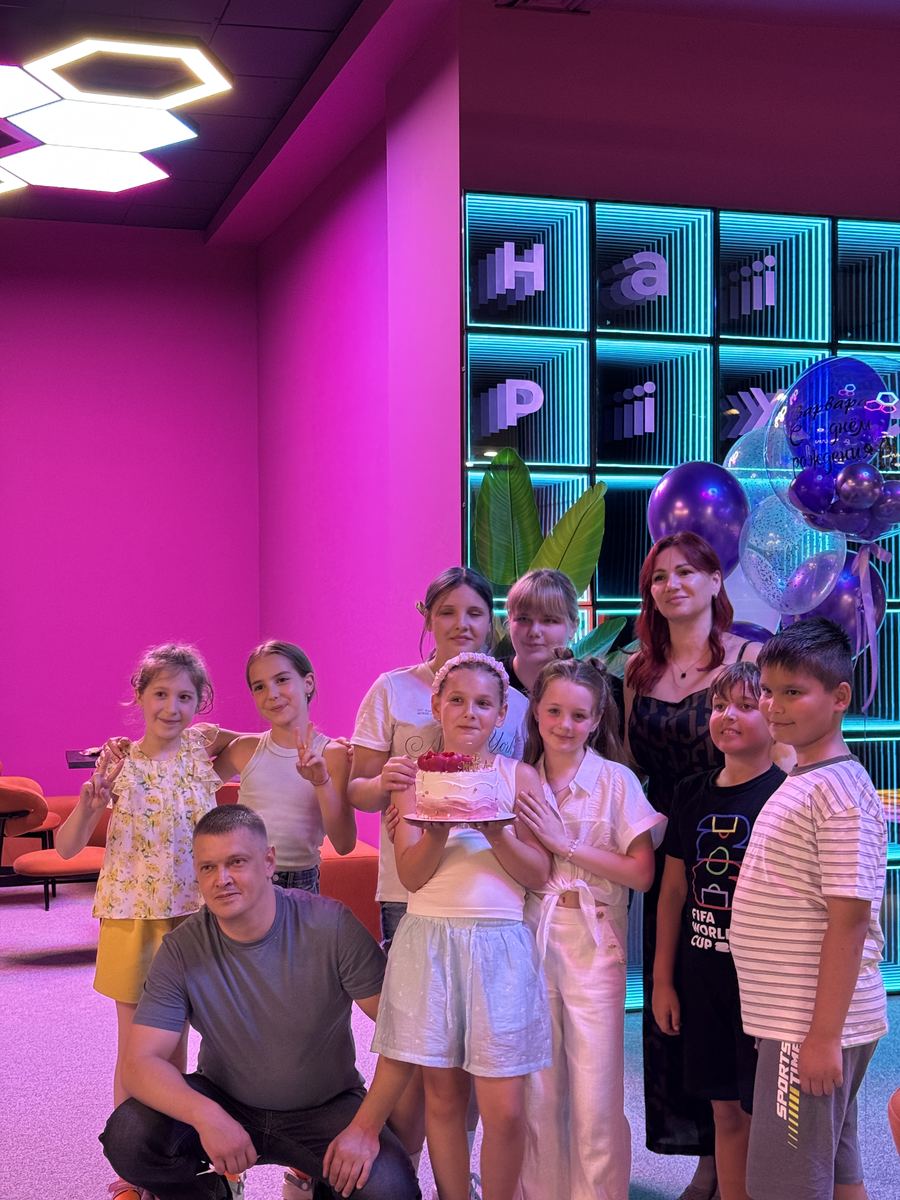
4 weeks ahead: date, venue, guest list
The first planning week has one job: lock the three decisions that cannot be changed easily later. Everything else can be adjusted as you go; the date, the venue and the headcount cannot.
1. Pick the date and the time
The weekend closest to the real birthday fills up first at every venue in town. If the birthday falls on a weekday, the Saturday before is the safest pick: kids are not worn out from school and parents are not rushing from work.
- The start time matters more than you think. For preschoolers, 11:00-13:00 catches kids rested. For ages 7-12, the afternoon (13:00-17:00) is easiest for everyone. For teenagers, evenings work best.
- Check what else is happening that weekend in your child's class: two parties on the same Saturday means half the RSVPs.
- Write down two possible dates before you call anywhere. If the first is taken, you do not lose a week to rescheduling.
2. Set the guest list
The list drives everything that follows: the budget, the venue, the amount of food, the size of the cake. Do it before any booking, not after. Who and how many is covered in the dedicated section below.
3. Book the venue
Only after the list, so you know what you are shopping for: a party of 8 is a different product from a party of 20. The questions to ask at any venue:
- How many kids are included in the price and what does each extra child cost?
- How long is the booking exactly, and from what time can you come in to set the table?
- Is there a separate area for cake and presents, or does everything happen in the play space?
- Do you bring food or order it there? Who cleans up?
- How many adults fit, and is there somewhere for them to sit?
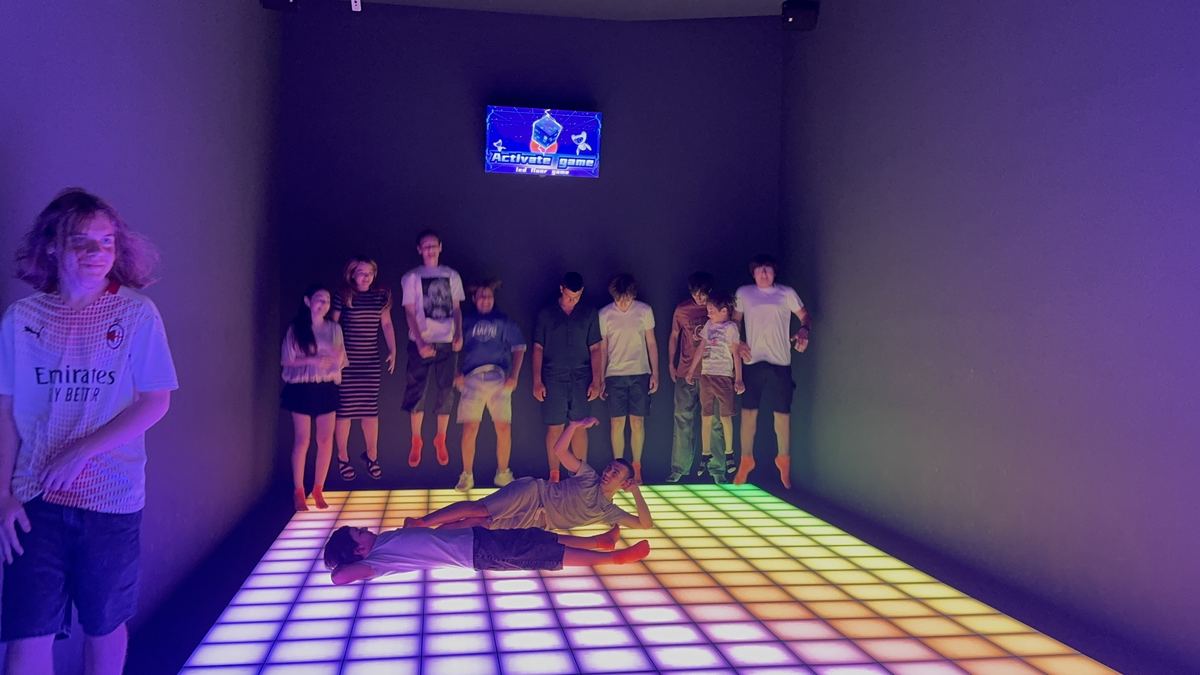
At Hai Pixel, for example, the package maps directly to the guest count: Party up to 8 guests (3000 MDL Monday to Thursday, 3500 MDL Friday to Sunday, one floor), Grand Party up to 16 (5000 or 6000 MDL, two floors, hard cap of 18 people), Festival up to 50 (8000 MDL and three floors up to 24 guests; from 25, all four floors, 9500 or 11000 MDL). All three run 2 hours, include the LED floor plus a dedicated celebration area for cake and presents, have a fixed price per group, and are bookable with online booking with the price shown before payment. The packages have no age limit: teenagers and adults book them just as often.
4. Ask the child what they want
Sounds obvious; this step gets skipped surprisingly often. Three questions are enough: who do you definitely want there, what do you want to do, and what cake do you want. If the answer to the second one is "play", you already have your format.
How many kids to invite: the age-plus-one rule and class etiquette
The practical rule many parents use: the child's age plus one or two guests. At 5, six or seven kids; at 7, eight or nine; at 10, eleven or twelve. The rule works because the number of children one adult can keep track of grows along with their age.
The whole class, or only part of it?
This is the most delicate call in the whole plan. The widely accepted practice in Chișinău schools:
- Invite the entire class or group (15-25 kids): nobody is left out, but you need a space sized for it and a format where every child has something to do at the same time.
- Invite only part of it: acceptable when the group has a clear, explainable criterion, for example only the girls, only the boys, only the deskmates of several years, or only friends from outside school. What does not work: inviting 18 out of 22 kids. The other four find out the same day.
- Do not hand invitations out in class unless everyone is invited. Send them straight to the parents, privately.
Siblings and adults
- Younger siblings often arrive with the invited child, especially at younger ages. Say explicitly in the invitation whether that is fine, and count them: 8 guests with 3 tag-along siblings is 11 children in the room.
- Parents. Under 5-6, most of them stay. From 7 upward, most drop the child off and return at the end time. Plan for 2-4 adults who definitely stay, plus you and your helper.
- One adult per 6-8 children is the comfortable ratio if there is no staff on site. In a venue with its own team running the games, you can go with fewer adults.
The budget: the cost lines to plan for
A kids' party budget breaks into six lines, and the surprises almost always come from the last two. Write all of them down before you book anything, even if some stay estimates.
- The venue or space. The biggest line if the party is not at home. Home costs nothing in rent but moves the cost into food, decorations, cleanup and nerves.
- The food. Depends on the format: snacks plus one simple warm dish is the standard that works for 2 hours.
- The cake. Almost always ordered separately and varies enormously by design.
- The decorations. Balloons, tablecloth, candles. If the venue already has a decorated area, this line drops to pocket change.
- Party favours. Optional, but if you do them, price them per bag and multiply by the number of children.
- Extras and transport. This is where the forgotten items live: anti-slip socks (30 MDL at Hai Pixel), the taxi with the cake on your lap, batteries, an extra hour if the party is going well.
How the guest count maps to a package
| Guests | Hai Pixel package | Floors | Total price Mon-Thu / Fri-Sun | Per guest at capacity |
|---|---|---|---|---|
| up to 8 | Party | 1 | 3000 / 3500 MDL | 375 / about 438 MDL |
| up to 16 (cap 18) | Grand Party | 2 | 5000 / 6000 MDL, plus 250 MDL per guest above 16 | about 312 / 375 MDL |
| up to 50 | Festival | 3 (4 from 25 guests) | 8000 MDL up to 24 guests; 9500 / 11000 MDL from 25 | 190 / 220 MDL |
All three packages run 2 hours and include the celebration area. On top of the 2 hours of games, the celebration area stays with your group for roughly 2 more hours, for cake, board games and hanging out, so the whole party runs about 4 hours. The arithmetic shows why big parties are, counterintuitively, more efficient per child: at 50 guests, Festival lands at roughly half the per-child cost of the smallest package. A concrete example: 14 guests plus the birthday child means Grand Party at 5000 MDL Monday to Thursday or 6000 MDL Friday to Sunday, plus 15 pairs of anti-slip socks (450 MDL), plus the cake ordered separately. Above 18 people you move up to Festival, and the total stops depending on each additional child.
3 weeks ahead: invitations
A good invitation answers every question the reading parent has, so they never have to message you. If you get three "where exactly is it?" replies, the invitation was incomplete.
What must appear
- The birthday child's name and the age they are turning.
- A start time and an end time. A clear end time saves awkward conversations at 9:30 pm.
- The exact address with floor and landmark. "Grand Hall, 2/4 Constantin Negruzzi Blvd, floor 2" is useful; "in the centre" is not.
- The RSVP deadline and your phone number.
- What the child should wear: comfortable clothes if the party is active.
- The allergy question, asked explicitly.
- Whether siblings are welcome.
- Whether you want presents at all, and optionally a theme hint.
Digital or paper?
Digital invitations sent straight to parents on messaging win on speed, cost and reply rate: the parent confirms in the same chat. Paper invitations win on ceremony and delight the child, but they arrive home crumpled in a backpack and the RSVP still comes by phone. The combination that works best: a digital message to parents for the information and the RSVP, plus a paper card your child hands out if they enjoy doing that.
A model invitation you can copy
Hi! Sofia is turning 7 and we would love Matthew to come. Saturday, 12:00 to 14:00, at Hai Pixel, Grand Hall, 2/4 Constantin Negruzzi Blvd, floor 2. We will be playing on the LED floor, so comfortable clothes please. We have cake and pizza; let us know if Matthew has any allergies. Younger siblings are welcome. Could you confirm by next Sunday on this number? Thank you! Ana, Sofia's mum.
How to chase RSVPs politely
Ask for confirmation by a specific date: one week before is the standard that works. If answers are missing at the deadline, send one short, neutral message along the lines of "Hi, I am giving the venue final numbers tomorrow, are you able to come?". One reminder is normal; three are pressure. Anyone who does not answer after that stays off the list, but leave a margin of one or two spots: at kids' parties one or two unannounced guests always turn up.
2 weeks ahead: cake and food
This week settles everything that has to be ordered early and everything you buy physically. Finish the list below and the last two weeks are pure coordination.
- Order the cake. Good Chișinău pastry shops need 1-2 weeks for custom orders. Confirm three things in writing: the size in portions, the pickup time and place, and whether it contains anything on the allergy list.
- Decide the food. For 2-hour parties, the formula that works: something to nibble at the start, a simple warm dish in the middle, cake toward the end. Active kids eat little and fast; overestimating quantity is the most common wasted spend. At a venue, check the available extras; at Hai Pixel you can add pizza and snacks directly to the package.
- Handle allergies. Make a list of children's names and their restrictions and hand it to whoever serves. One separately prepared allergen-free option is worth more than an extra dessert for everyone.
- Buy the small stuff: candles (and a spare lighter), balloons, plates, napkins, party favours if you want them, a marker and tape.
- Decide who takes the photos. If nobody owns that role, you end up with 40 blurry frames from three phones and none of the whole group.
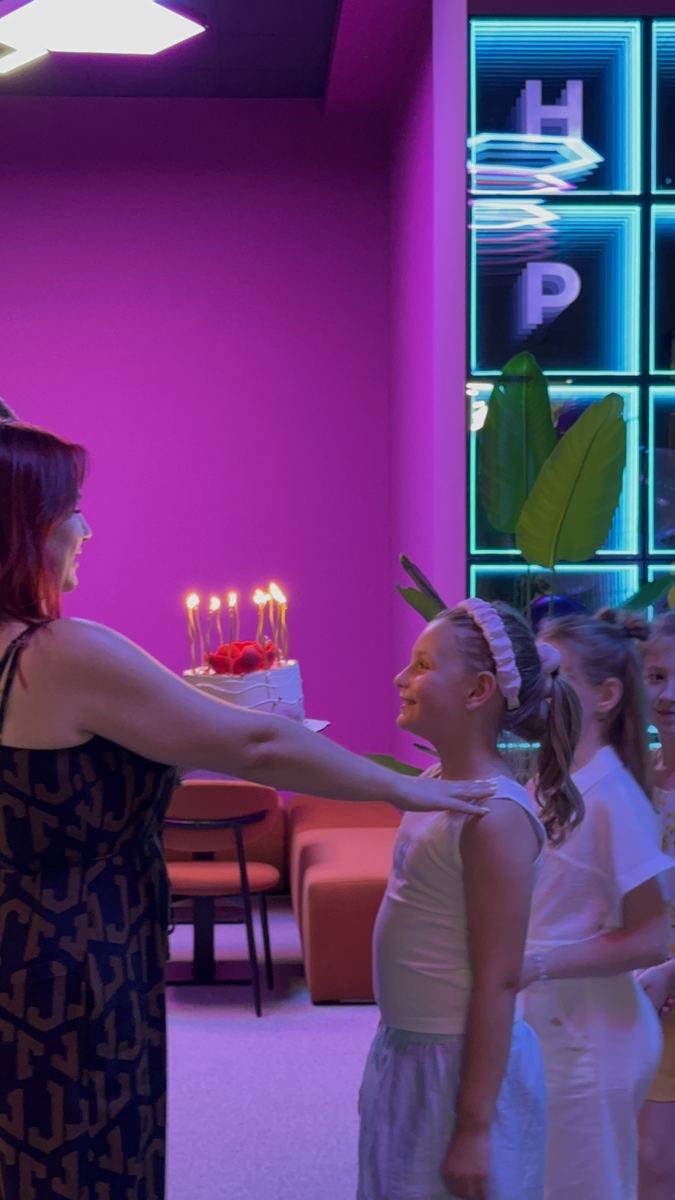
1 week ahead: RSVPs and the schedule
The final week is not about decisions any more. It is about exact numbers and clear roles.
- Count the real confirmations and tell the venue if the number changed. Easier for everyone than a party-day surprise, and with capacity-tiered packages it can even change which package you need.
- Write the minute-by-minute schedule (models below) and send it to your helper.
- Assign roles: who films, who lights the candles, who stands at the door and ticks off arrivals, who handles presents, who packs up at the end.
- Plan an occupation for younger siblings if they are coming, or they will attach themselves to the big kids' program.
- Reconfirm the cake 3-4 days ahead with a short message to the pastry shop.
- Write the packing list for party day now, not in a rush that morning.
The day before: what to prepare and what to pack
The day before exists so that you improvise nothing on the morning of the party. It takes 30 minutes and halves the stress.
- Charge the phones and the camera; free up storage space.
- Put everything in one bag, not four carrier bags.
- Send one reminder to the parents' group with the time and address. One message, not three.
- Check the route and the parking, especially for a central venue.
- Put the birthday child to bed at the usual time. A tired child does not enjoy their own party.
The packing list
- Candles, a lighter or matches, a knife and a server for the cake.
- Wet wipes, paper napkins, a bin bag.
- A change of clothes for the birthday child and a spare t-shirt.
- Anti-slip socks, if the venue requires them and you are not buying them there.
- A box or bag for presents, plus a pen to note who brought what.
- A small kit: plasters, antiseptic wipes, a bottle of water.
- The guest list with parents' phone numbers, printed or saved offline.
- A phone charger and, if possible, a power bank.
Party day, hour by hour
The rule of the day: you are not the entertainer, you are the coordinator. If the venue has its own team running the games, your place is at the door, at the cake and on the phone.
- 2-3 hours before: pick up the cake and keep it cool. Check the bag against the list.
- 30-45 minutes before: arrive at the venue, set the table, hand over the cake, tell the team the birthday child's name and the time you want the candle moment. If you have a playlist, hand it over now.
- 10 minutes before: stand at the entrance with the list. Tick each child off as they arrive and confirm the end time to parents.
- During the party: do not try to take photos and coordinate at once. You already gave someone the photographer role.
- 20 minutes before the end: the group photo, while everyone is still there. Then presents.
- The last 10 minutes: party favours at the exit, not in the middle of the room. Hand them out as kids leave and you avoid the collective unwrapping.
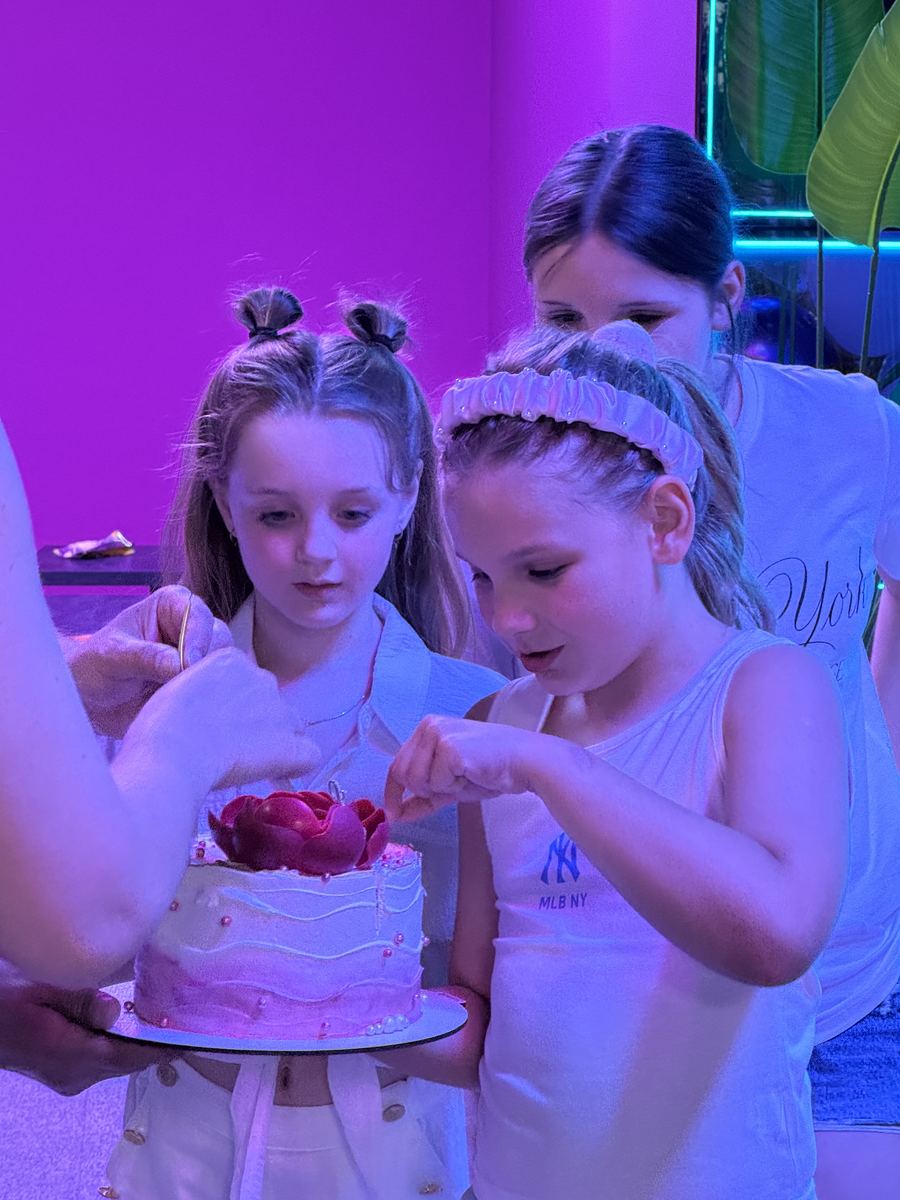
The model schedule for a 2-hour party
The structure below produces the fewest dead moments: activity, food, activity, short finish.
| Minute | What happens |
|---|---|
| 0:00-0:15 | Arrival, gearing up, first exploring. Schedule nothing important here: someone is always late. |
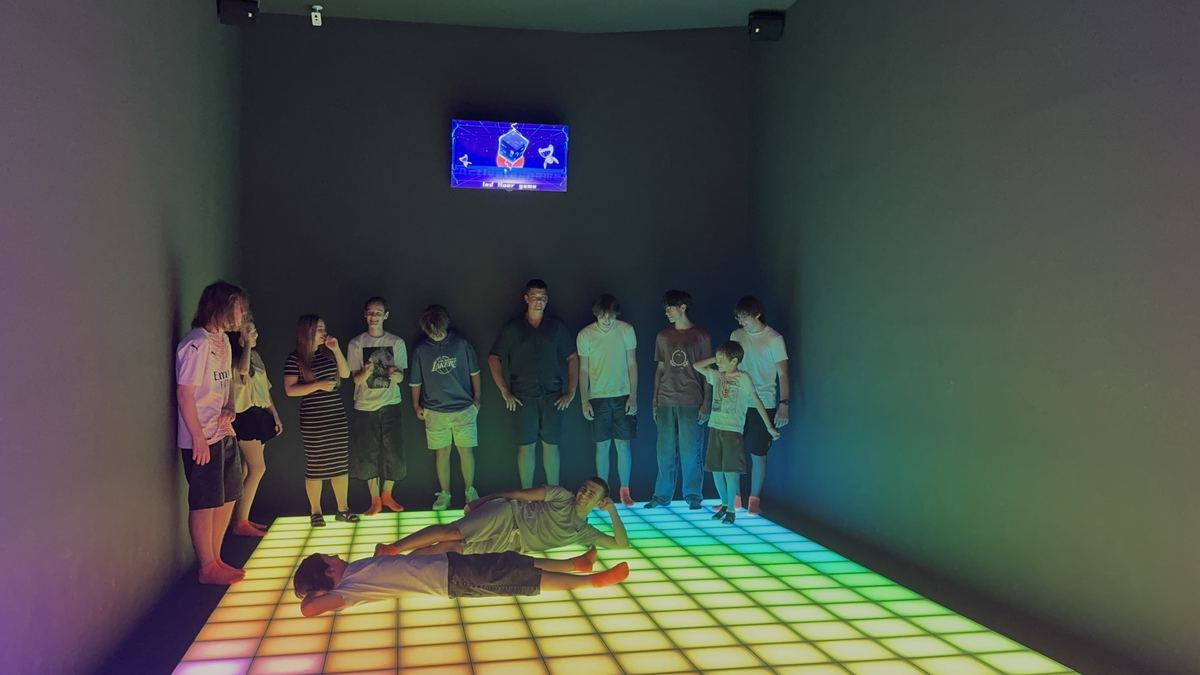
| 0:15-1:00 | First activity round. At Hai Pixel: LED-floor games in teams with a live score wall; 2-3 minute rounds keep every kid switched on. |
| 1:00-1:25 | Food and cake. Active kids eat fast; do not allocate more. |
| 1:25-1:55 | Second round of games, with the rematches demanded over food. |
| 1:55-2:00 | Presents, group photo, goodbyes. |
The 3-hour variant, if you add an extra hour
Three hours works from about age 8-9 upward, and only if the meal is more substantial. Below that age, the third hour turns into tiredness. At Hai Pixel the format comes from adding an extra hour to the 2-hour package.
| Minute | What happens |
|---|---|
| 0:00-0:20 | Arrival, gearing up, free play. A wider margin for latecomers. |
| 0:20-1:10 | First round of team games, with a scoreboard. |
| 1:10-1:45 | The warm meal and the talking break. |
| 1:45-2:05 | Cake, candles, group photo while everyone is at the table. |
| 2:05-2:45 | Second round of games: rematches, reshuffled teams, the final. |
| 2:45-3:00 | Presents, party favours, staggered goodbyes. |
What to do when things go off plan
Every scenario below is common, and every one has a simple fix if you have thought about it in advance.
Fewer children turn up than planned
The most frequent incident, especially in winter when colds rewrite lists on the last day. The party is not ruined: with 5 kids instead of 8 the games get more personal and the cake slices get bigger. Tell the venue an hour ahead if you can, so they adjust the food. On capacity-priced packages the total stays the same, so there is no point hunting for a last-minute discount.
A child is upset or refuses to join in
This happens most often in the first 15 minutes, in an unfamiliar space. What works: do not push, do not make it visible, give them a side role (keep score, choose the next game, help with balloons) and give it 10 minutes. Most join in on their own once they have watched a full round. If it is the birthday child who is upset, they are usually overloaded: take them out of the room for 5 minutes, water, quiet, then back.
You are running late against the schedule
Cut from the second activity round, never from the cake. The cake is the moment the child remembers and the only one that cannot be shortened without it showing. If you started late, shift the whole plan by 10 minutes and shorten the finish.
You are running early
Do not improvise a new activity. Extend what is already working: another round of the favourite game, a rematch between teams, one round of parents versus kids. In a space with many games, asking "what do you want to play next?" solves the last 15 minutes by itself.
Parents stay longer than you planned
Not a problem if you have somewhere to seat them. It becomes one if they occupy the play space. Show them the adult area on arrival and offer them something to drink; they settle themselves.
The mistakes that ruin good parties
- An overloaded program: two big activities are enough for 2 hours.
- Cake scheduled at the end: the last 10 minutes are goodbye chaos; put it in the middle.
- No end time on the invitation: see the 9:30 pm conversations.
- Booking late: good weekend slots vanish weeks ahead, especially in the cold season when everything moves indoors.
- Opening presents mid-party: 15 minutes of chaos and at least one upset child. Open them at home and just say thank you at the party.
- Too much food: children who run around eat half of what you estimate.
- No group photo: the one everybody asks for a week later and the only one you cannot go back and take.
If you are planning further ahead, keep reading: the six themes and how to run them, where to hold a child's birthday, the cost breakdown, the rule for the guest count and how to plan a surprise party.
Frequently asked questions
How many kids should I invite?
The practical rule: the child's age plus one or two. For a full kindergarten or school class, pick a space designed for 15-25 kids so everyone has something to do. If you are not inviting the whole class, invite by a clear criterion and send the invitations privately.
How far ahead should I book the venue?
For a weekend slot in Chișinău, 3-4 weeks ahead is the safe window. At Hai Pixel you see availability in real time in the online calendar, no phone calls needed, and the price is shown before payment on the prices page.
How long should a kids' party last?
A birthday package means 2 hours of LED-floor games together with your table area, then roughly 2 more hours in which the celebration area stays just for your group, for cake, board games and winding down. Plan around 4 hours at Hai Pixel in total.
How many adults usually stay?
Under 5-6, most parents stay. From age 7 upward, most drop off and come back at the end time, so plan for 2-4 adults staying, plus you and your helper. Say in the invitation whether you have room for parents.
What if fewer children show up than confirmed?
Tell the venue as early as you can so they adjust the food. The party does not suffer: with fewer children the games get more personal. On capacity-priced packages the total stays the same, so it is worth flagging early if you can see the number dropping.
When do I hand out presents and party favours?
Accept presents, say thank you and open them at home: opening mid-party eats 15 minutes and always leaves somebody unhappy. Hand party favours out at the exit as the children leave.
How much does a kids' party at Hai Pixel cost?
Birthday packages have a fixed price per group: Party up to 8 guests 3000 MDL Monday to Thursday and 3500 MDL Friday to Sunday, Grand Party up to 16 guests 5000 or 6000 MDL (plus 250 MDL per guest above 16), Festival 8000 MDL every day up to 24 guests and 9500 or 11000 MDL for 25 to 50 guests. All run 2 hours and include the LED floor plus the celebration area; cake, pizza, snacks, anti-slip socks (30 MDL) and an extra hour are added separately.


