

A day camp, a school class or an after-school group in Chișinău can visit Hai Pixel on the organised-group rate: 100 MDL per child for groups of up to 20 children and 150 MDL per child for groups of 20 to 30, with counsellors, teachers and chaperones entering free. Booking is by phone only, at +373 79 238 617, and the right window is weekdays between 10:00 and 16:00. In practice a visit takes about an hour and a half: one hour of active play plus changing, the briefing and the group photo. This guide is not written for a parent choosing a weekend outing. It is written for the adult who has a season calendar to fill.
Hai Pixel, the first interactive LED-floor venue in Chișinău, runs across 360 m² in the city centre at Grand Hall, bd. Constantin Negruzzi 2/4, second floor. The floor responds to pressure, there are more than 30 movement games, rounds last 2-3 minutes, and the score is shown live on the wall screen. A standard session is built for 2-24 players, the venue is open daily 10:00-22:00, the team speaks Romanian, Russian and English, and the Google rating is 5.0. Organised children's groups, however, have their own rate and their own booking route, and that is what the rest of this guide is about.
What does the camp rate include and what does it cost?
The group rate is calculated per child, for one hour of play, not per session. That difference matters in practice: a normal online booking is paid as a session for a given number of players, while an organiser needs a figure that can be multiplied by the attendance list and taken to approval. That is why day camps, summer camps, classes, after-school groups and educational centres have a separate grid.
| Group | Rate per child | Adults with the group | When it applies |
|---|---|---|---|
| Up to 20 children | 100 MDL | free | weekdays, 10:00-16:00 |
| 20-30 children | 150 MDL | free | weekdays, 10:00-16:00 |
| More than 30 children or two classes | agreed on the phone | free | weekdays, the arena is taken over by your group |
| After 16:00 or at the weekend | group rate does not apply | pay only if they play | daily 10:00-22:00, standard session price |
The rate covers everything needed to run the hour: the room, choosing games that fit the age band, splitting the group into teams, running the rounds and the live score on screen. The only separate cost is anti-slip socks at 30 MDL a pair. The floor is played on in socks, so it is worth writing "socks are compulsory" on the kit list for that day: children who bring their own pay nothing extra.
A second hour of play is discussed when you book. One hour works for almost any group; ninety minutes to two hours depends on the age band and on how many children are waiting between rounds. The programme details live on the kids camps page, and for a class with a teacher, on the school trips page.
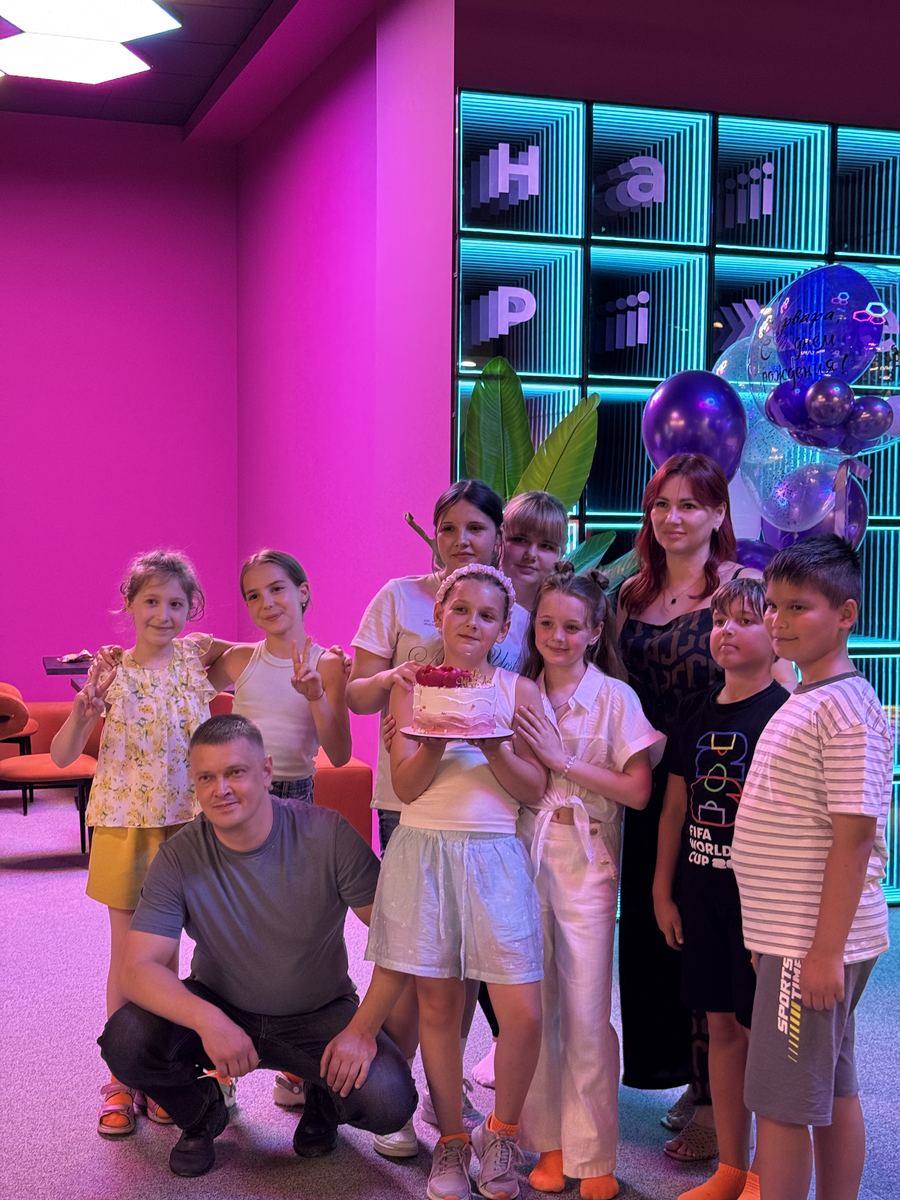
How does an hour of play fit into an 08:00-17:00 camp day?
The real problem in a day camp is not a shortage of ideas. It is that the day already has a fixed shape: morning assembly, snack, lunch, quiet hour for the younger groups, pick-up from 16:00. An outing that does not fit that shape turns into hungry children and phone calls from parents. The weekday 10:00-16:00 window is also much calmer than the weekend, which means more staff attention for your group.
| Time | What happens |
|---|---|
| 08:00-09:30 | Arrival, snack, register, socks and water bottles checked |
| 09:30-10:30 | Travel into the centre and the first activity block of the day |
| 10:30-10:50 | Arrival, changing, short briefing and the team split |
| 10:50-11:50 | The hour of play: 2-3 minute rounds, live score between teams |
| 11:50-12:10 | Final leaderboard, group photo, collecting belongings |
| 12:30 | Back at camp, exactly in time for lunch |
Two observations that hold up every time. First, do not schedule the play hour straight after lunch: a group that has just eaten runs badly and complains quickly. Second, late morning around 11:00 is the best hour of the day for a children's group, and 15:00 works as a second peak, when energy comes back before going home.
If you want to weigh an hour of play against the other options for 8-12 year olds, the parent-facing guide to activities for children aged 8-12 in Chișinău covers exactly that age filter.
Group logistics: 20, 25, 30 children and beyond
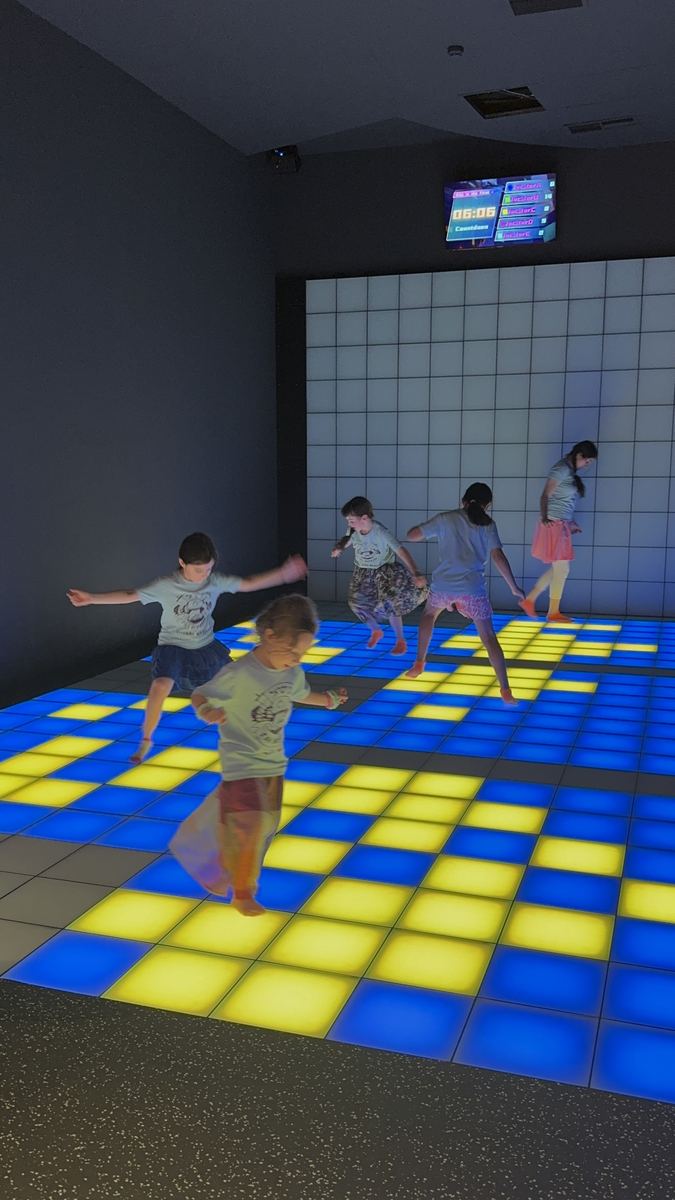
This is where most group plans break, whatever venue you pick. Headcount does not only change the price, it changes the shape of the visit. At Hai Pixel floors are added according to how many players there are: up to 8 players use one floor, 9 to 16 use two, and 17 to 24 use three. Twenty-four children is the maximum playing at the same time in a standard session.
| Number of children | How it runs | What you must plan |
|---|---|---|
| Up to 8 | One floor, everyone plays at once | Nothing special, one adult is enough |
| 9-16 | Two floors, team against team | The team split written out in advance, on paper |
| 17-24 | Three floors, the whole group plays at once | Two adults in the room for water and toilet runs |
| 25-30 | The number of floors is agreed on the phone | A written rotation plan with small numbered groups |
| More than 30 or two classes | The arena is taken over by your group | Waves: two rounds, plus an activity for those waiting |
The honest advice for large groups: do not try to cram 34 children into a single hour just to save money. What you get is a loud room where half the children stand at the edge on their phones. Two waves of 17 children, back to back, produce a better visit every time, and the 2-3 minute rounds make rotation natural: nobody waits an hour for a turn.
A separate word about mixed-age squads, because in a camp that is the rule rather than the exception. If the group holds both seven year olds and thirteen year olds, do not split them "by height": mixed teams work better than "little ones against big ones", where the result is known in advance and the younger half loses interest after the second round. Say so when you book, so the games are picked for the bottom of the age range rather than the average. And if you are splitting into waves, split along the squads you already have rather than alphabetically: a squad comes with its own counsellor, its own habits and its own list, and on the day that saves ten minutes of confusion.
How many adults do you need, and what do the waiting children do?
The games are run by the venue team: they pick the games, explain the rules, start the rounds and keep the score. The camp's adults do not have to animate anything. They do stay responsible for the parts nobody can delegate: the register, water, toilet trips, the child with a scraped knee and the child who does not want to step onto the floor. In practice one adult per team in the room covers all of that comfortably, and since chaperones enter free, bringing one extra costs nothing.
Your own institution's rules on supervision may be stricter, and those are the ones that matter at approval. We neither set them nor replace them, so check them before you fix a date rather than discovering on the day that an adult is missing from the list.
As for the children who are waiting, it is a fair question and it deserves a concrete answer. The live score turns the edge of the room into a stand, and the waiting team can be given a role: supporters, referees, the people tracking points. That works far better than "wait here for five minutes". If the waiting wave is longer than a quarter of an hour, plan something of its own for it: the snack, a short walk in the centre, the team games already in your camp programme.
What do you do when a heatwave or rain wrecks the outdoor plan?
Every camp organiser in Chișinău knows the scenario. The summer programme is built around the yard, the park and the sports pitch, and then a heatwave week arrives when you cannot take children outside at midday, or three straight days of rain. On those days you need an activity that does not depend on the weather and that burns physical energy, not another film in the classroom.
This is exactly where an hour on the LED floor does its job: it is indoors, it is real movement, and children come out of it tired in the good sense. The practical advice is to treat the venue as a plan B prepared in advance rather than an emergency fix: call at the start of the season, ask which weekday slots are usually free, and keep the number in the camp diary. A plan B you can trigger with one phone call is worth far more than one you have to invent on a wet morning.
To be honest about it: on a good day a park or a sports pitch is still the better and cheaper choice for a day camp. A paid indoor activity earns its place as a weekly change of pace and as the bad-weather answer, not as a replacement for being outside.

Budget per child: two calculations you can take to approval
Approval is not won with a description of the activity. It is won with a ceiling per child. Here are two real calculations with the exact figures.
Example 1. A group of 18 children and 2 counsellors, Tuesday at 11:00. The group sits in the "up to 20" band, so 18 x 100 = 1800 MDL. The 2 counsellors enter free, so 0 MDL. Assume 12 children did not bring socks: 12 x 30 = 360 MDL. Total 2160 MDL, which is 120 MDL per child, everything included. If every child brings socks from home, the ceiling drops to 100 MDL per child.
Example 2. A group of 26 children and 3 chaperones, Thursday at 11:00. The group sits in the "20-30" band, so 26 x 150 = 3900 MDL. Chaperones enter free. In the worst case no child has socks: 26 x 30 = 780 MDL. Maximum total 4680 MDL, which is 180 MDL per child. That is the number to put in the request, because it is the ceiling rather than the optimistic average.
It is also worth knowing what the alternative looks like outside the camp window, because finance always asks. The group rate applies only on weekdays between 10:00 and 16:00. Outside that band you pay the standard session price, and that is calculated per session, not per child.
| Situation | Total price | Per child |
|---|---|---|
| 18 children, group rate, weekday 11:00, 1h | 1800 MDL | 100 MDL |
| 18 players, standard weekend session, 1h | 2580 MDL | about 143 MDL |
| 12 players, standard weekday evening session, 1h | 1760 MDL | about 147 MDL |
| 16 players, standard weekend session, 1h | 2400 MDL | 150 MDL |
The practical conclusion: if your group can come on a weekday before 16:00, the camp rate is the one to use. If the date has to be a Saturday, treat it as an ordinary outing and check the exact figure on the prices page, where the grid is by headcount and time band.
A weekly slot: closing the season with one phone call
The most useful part for an organiser is not the one-off visit, it is the recurring slot. If your camp runs for eight or ten weeks, you can lock the same day and the same hour for the whole season in a single call. The benefit is not only administrative: children start looking forward to that day, and you get one box in the weekly timetable already filled instead of reinventing the programme every Monday.
What to have ready before that call: how many weeks the season runs, your preferred day and a backup day, the time, the approximate headcount per week and a sensible margin, because camp groups fluctuate. The exact number is confirmed a day or two before each visit. If the headcount crosses the 20-child threshold, the per-child rate changes with it, so flag the variation early rather than on the morning of the visit.
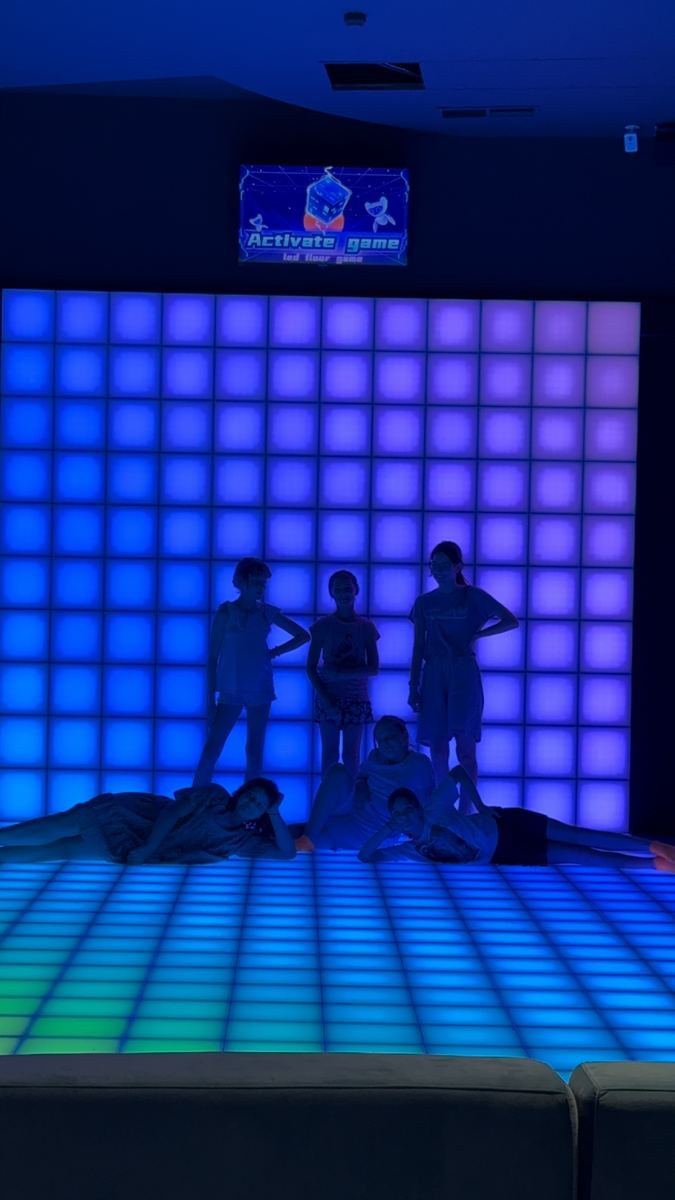
How to book for a group: step by step, phone only
There is no online booking for organised children's groups. The form on the site prices standard sessions by number of players and knows nothing about the per-child rate, free chaperones or splitting a group into waves. Everything is therefore arranged by phone, on +373 79 238 617.
- Call with three things ready: the number of children, their age band and two possible dates. Without them the call ends with "we will get back to you".
- Fix the time and the duration. One hour is the standard; a second hour is decided there, based on age and group size.
- Confirm the shape of the visit: one wave or two, how many floors, how many adults come in with the group.
- Ask about payment and paperwork during the booking call, so you know exactly what your accounts department gets and when. It is far easier now than on the day.
- Reconfirm a day or two ahead with the final headcount and how many pairs of socks you need.
For a private outing outside the camp programme, ordinary booking is still available online on the booking page. For organised groups, though, the phone is the only route.
When Hai Pixel is not the right choice
There are situations where another venue serves you better, and saying so plainly saves everyone time.
- Groups under 5 years old. The games assume rules, reaction and understanding a score. For the youngest groups a soft-play centre with staff used to preschoolers is simply the correct fit.
- Trips with a curriculum objective. If the visit has to tick a history, biology or art topic, a museum, a theatre or a botanical garden does that and we do not. You come here for movement, teamwork and energy spent.
- Groups over 30 that cannot be split. If your schedule cannot absorb two waves, pick a space built for one large block.
- Budgets under roughly 100 MDL per child. That is the entry point, and below it the right answer is a free outdoor activity rather than a negotiation.
- Groups that can only come at the weekend. The camp rate is a weekday rate; on a Saturday you pay standard session prices.
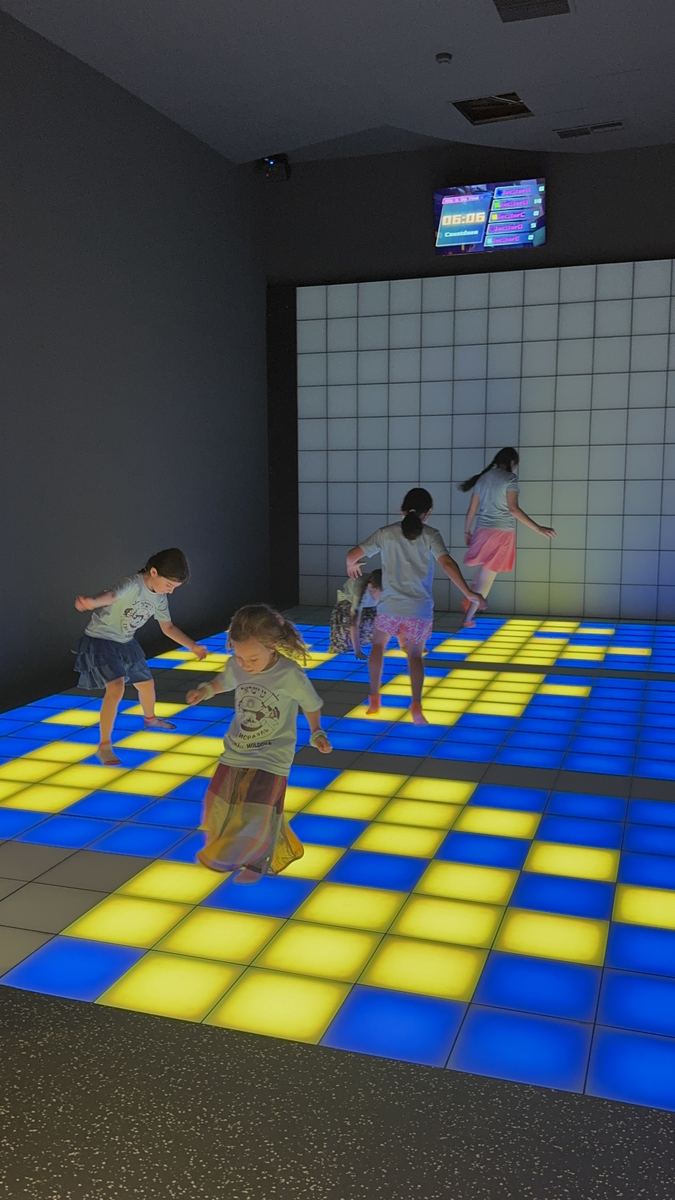
Organiser's checklist before you leave
- The final register and the headcount confirmed by phone the day before.
- Socks for every child, plus a few spare pairs for the ones who forget.
- Loose clothes: this is running, not sitting.
- Water. The hour is intense and children sweat more than adults expect.
- One adult assigned to photos, so the group shot is not forgotten at the end.
- The name and mobile number of the responsible adult, left at reception on arrival.
- A plan for the child who does not want to play: referee, or keeper of the score.
If you are planning further ahead, keep reading: the guide to kids' activities by age and what children play in teams indoors.
Frequently asked questions
How much does it cost to bring a kids camp to Hai Pixel?
100 MDL per child for groups of up to 20 children and 150 MDL per child for groups of 20 to 30, for one hour of play. Counsellors, teachers and chaperones enter free. Anti-slip socks are 30 MDL a pair if children do not bring their own.
Can an organised group book online?
No. For camps, classes and organised children's groups the booking is made by phone only, on +373 79 238 617. Online booking prices standard sessions and knows nothing about the per-child rate or free entry for chaperones.
How many children can play at the same time?
Up to 24 players play simultaneously in a standard session, across three floors. For groups of 25-30 children the number of floors is agreed by phone, and above 30 children or two parallel classes the whole arena is taken over by the group, with play running in waves.
When is the best time for a group to come?
On weekdays between 10:00 and 16:00. That window fits a day camp routine and it is much calmer than the weekend. Around 11:00 children's groups have their best energy, and straight after lunch is the weakest moment of the day.
From what age does it make sense?
Realistically from 5 or 6, when a child understands a rule and a score, and it works best between 7 and 14. For preschool groups under 5 we honestly recommend a soft-play centre designed for that age instead.
Can we come every week for the whole season?
Yes, and it is the simplest option for an organiser: the same day and the same hour reserved for your group all season, arranged in a single phone call. The exact headcount is confirmed a day or two before each visit.


