
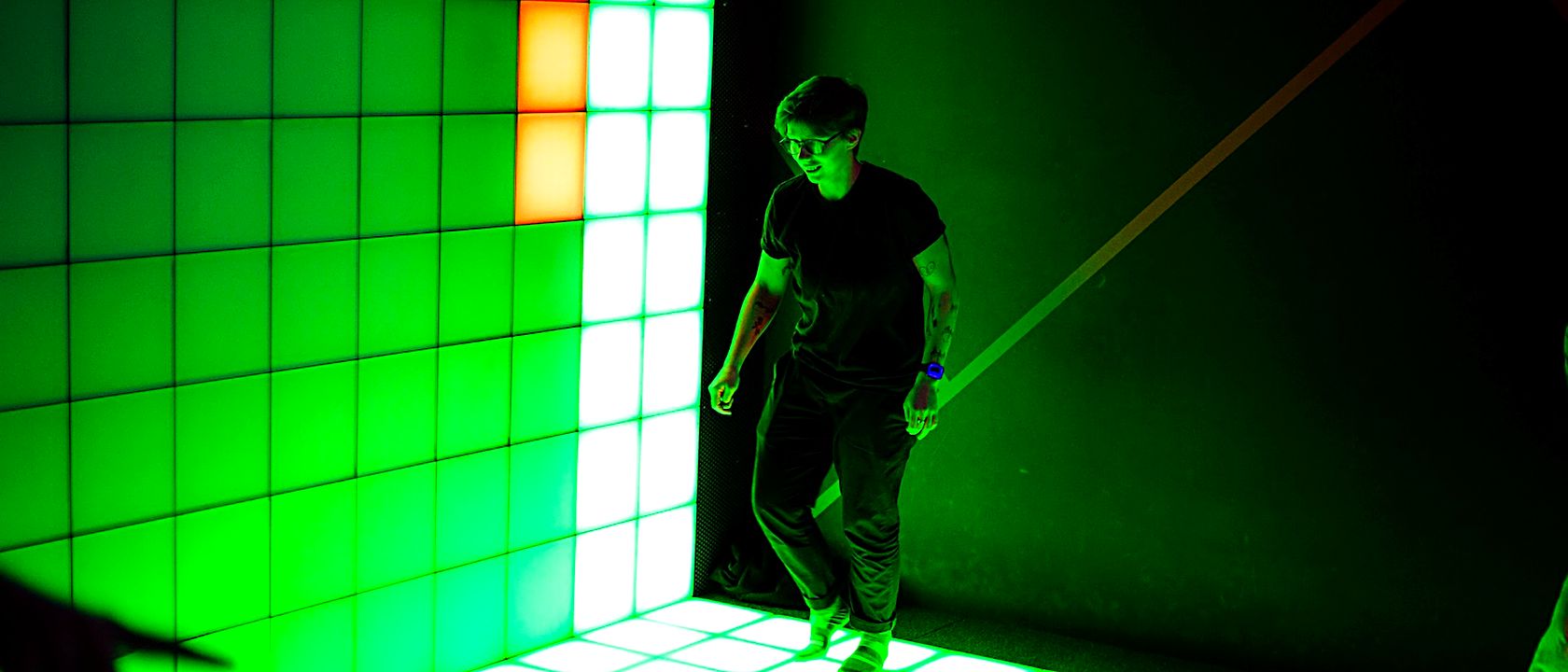
Indoor team building in Chișinău can be organised all year round, and the active formats that need no trip out of town come down to four: a session on an interactive LED floor, an escape room, bowling or pool, and a hands-on workshop. At Hai Pixel, the first interactive LED-floor venue in Chișinău, teams of up to 16 colleagues book straight online at standard group pricing, from 300 MDL an hour for 2 people on a weekday daytime slot up to 1600 MDL an hour for 16 people in the same band. Larger teams, from 17 to 60 people, are arranged as a custom event by phone on +373 79 238 617. Company formats are set out on the team building page, and the guide below helps you pick the right format before you request anything.
Why indoor became the default choice
For years, "team building" in Moldova meant a full day out of town: transport, outdoor activities, lunch somewhere along the way, back in the evening. That format still makes sense for a one or two day offsite with strategy sessions and long stretches of social time. For everything else, meaning most events an HR lead or a team lead actually organises, it has three practical problems.
The season is short and the weather decides at the last minute. An outdoor activity depends on a forecast you do not control. When rain shows up two days out, your options are to move the whole event or to hope. An indoor venue removes that variable entirely: the programme is the same in January and in July.
It eats half a day or more. Travel out of town adds hours that do not appear in the plan but do appear in everyone's calendar. Colleagues picking children up from kindergarten, people working hybrid, anyone with clients in another time zone: those are exactly the people who decline politely and then are missing from the photos.
Logistics push the budget in ways that are hard to predict. Transport for a large group, a weather fallback and a meal on the road are all quoted separately, usually by phone and case by case. An event inside the city, where people arrive on their own, has a budget you can actually forecast.
The conclusion is not that outdoor is wrong. It is that for a two or three hour event which has to happen on an ordinary working day, active indoor wins almost every time.
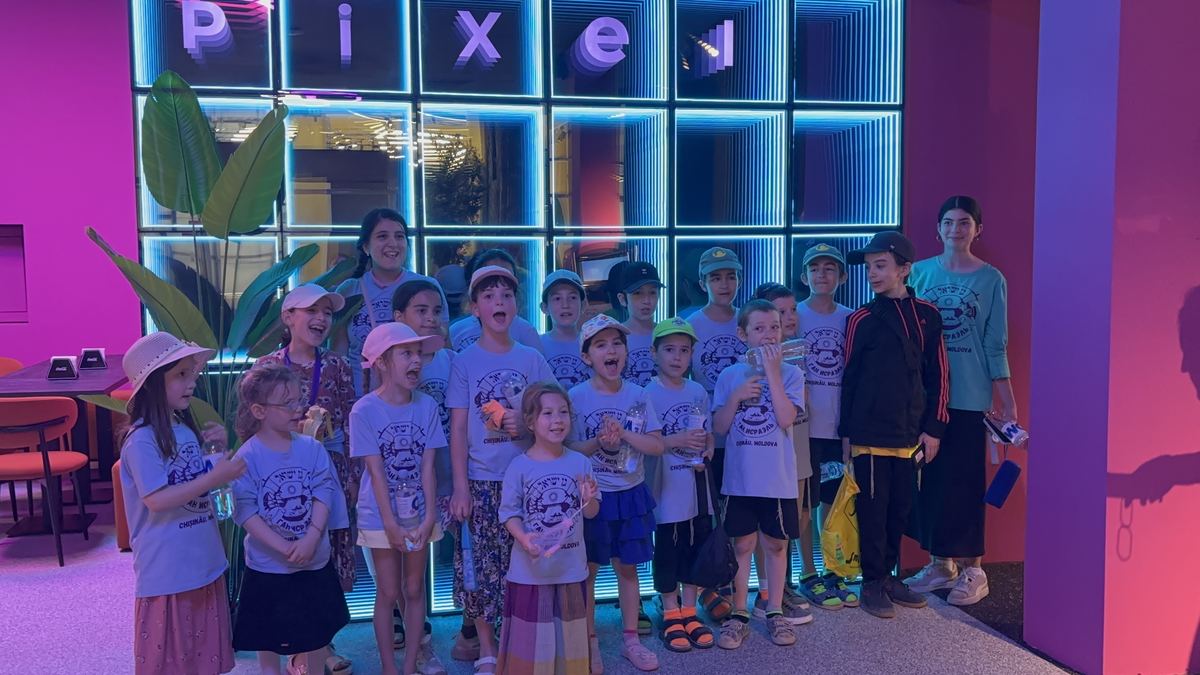
The four indoor formats that actually work in Chișinău
Listed in roughly the order teams pick them, with the weaknesses stated openly. None of them suits every group.
1. Escape rooms
An escape room in the centre usually takes a small group, somewhere between two and six people, for around an hour of play. It is the most cerebral of the formats and works very well for a small technical team where people genuinely listen to each other.
The weakness: it scales badly. A team of fourteen needs parallel rooms, which means separate bookings and two different experiences. The second weakness is subtler: in many groups one or two dominant people solve the puzzles while everyone else watches. If your goal is that everybody takes part, an escape room does not guarantee it. Pricing is quoted per room and varies a lot from venue to venue, so ask for the quote in writing.
2. Bowling or pool
The real advantage is accessibility: it works for any age, any level of fitness and any outfit. Nobody feels put on the spot, and the mood is relaxed, which suits a celebration after a project closes.
The weakness: dead time. In a game each person plays briefly and waits a long time, and the conversation splits into clusters of two or three, usually the same clusters that already sit together at the office. As socialising it is good; as team building proper, where the group has to coordinate, it is weak. It is priced per lane per hour, so ask early how many lanes can be booked at once.
3. The interactive LED floor
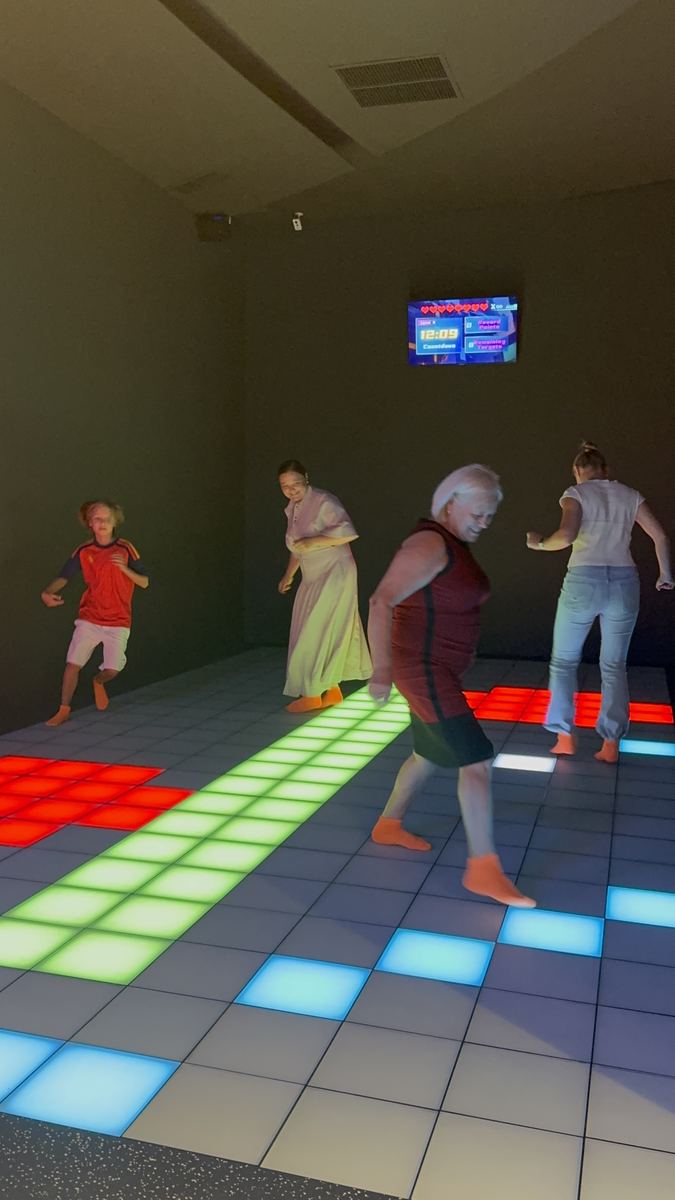
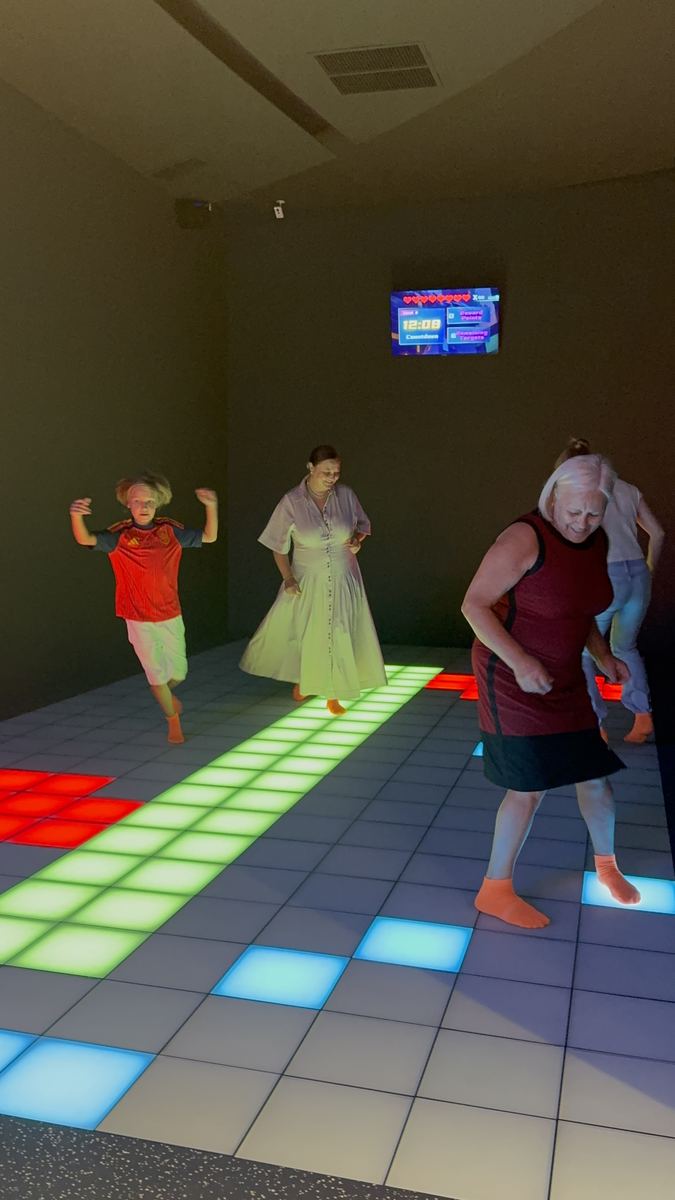
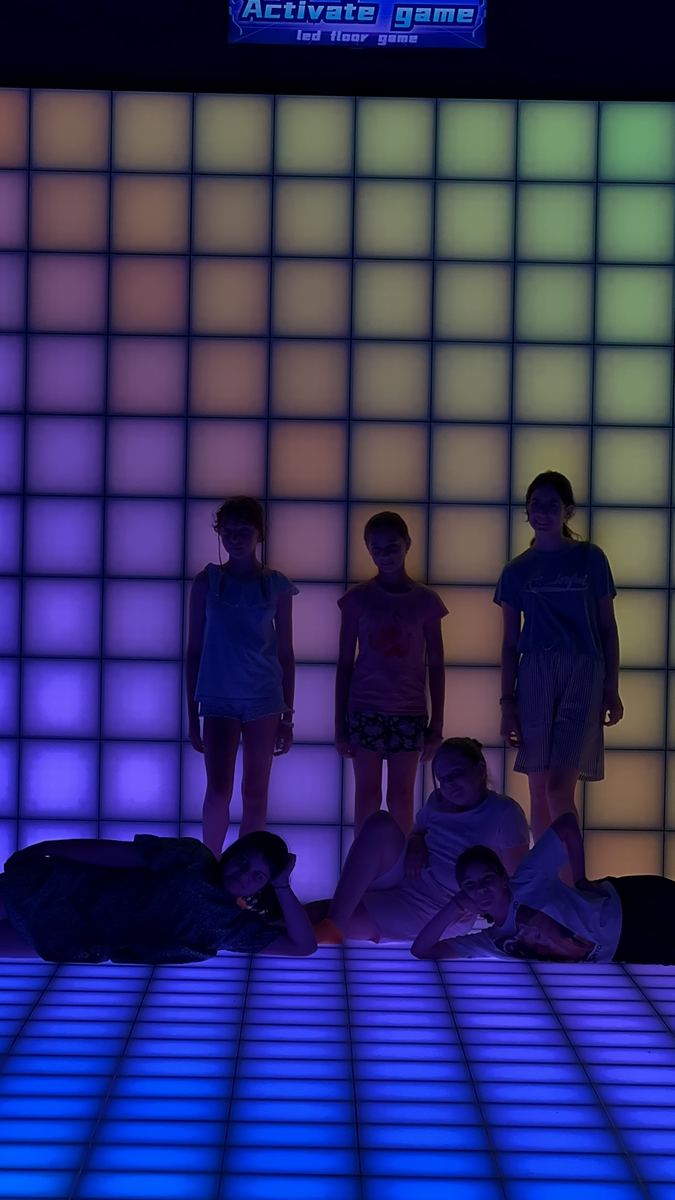
This is the most physical of the four and the only one where everybody plays at the same time rather than in turns. The floor responds to footsteps, the games change every few minutes, and the score updates live on a wall monitor. There is no skill or equipment barrier: you do not need to know anything in advance, and the rules of each game take seconds to explain.
The weakness: it is an activity in motion. For a team where several people cannot spend two hours on their feet, or for a formal event with presentations and a projector, it is the wrong choice. Dress code matters too: colleagues arriving straight from a client meeting in a suit will still play, but it is fairer to warn them in advance.
4. A hands-on workshop
A cooking, pottery or craft workshop has the calmest rhythm and works well when the team spans very different ages and physical abilities. People work with their hands, talk without pressure and go home with something they made.
The weakness: it is slow and largely passive. A big group splits into tables that stop interacting with each other, and the extroverts get restless. Prices depend heavily on the workshop and its materials, so they are quoted individually.
There is a fifth, classic option: an event room with catering, in a hotel or a restaurant with a separate space. It is the right answer when the event includes a speech, an awards moment or a results presentation. As pure team building it has the obvious drawback that people sit and listen.
Comparison table
| Format | Team size | Physical intensity | Main weakness |
|---|---|---|---|
| Escape room | small groups, parallel rooms for big teams | low | one or two people solve it, the rest watch |
| Bowling or pool | medium to large | low | long waits, the team splits into small clusters |
| Interactive LED floor | 2 to 24 in a standard session, up to 50 as an event | high | requires movement, no good for a formal, seated agenda |
| Hands-on workshop | small to medium | low | slow pace, a large group breaks into separate tables |
| Event room with catering | any | none | people sit down, interaction stays the same as at the office |
What a session on the LED floor actually looks like
Hai Pixel sits in Grand Hall, bd. Constantin Negruzzi 2/4, second floor, and is open daily from 10:00 to 22:00. The playing area is around 360 m² of pressure-sensitive LED floor with more than 30 movement games loaded into the system. A round runs two to three minutes, then teams reset for the next game while the score updates live on the wall monitor.
You play in socks. If someone does not have anti-slip socks, they can be bought on site for 30 MDL a pair, and for a company event it is simpler to budget them for everyone than to hope each person remembered. Staff speak Romanian, English and Russian, which matters if your team includes relocated colleagues or visiting guests.
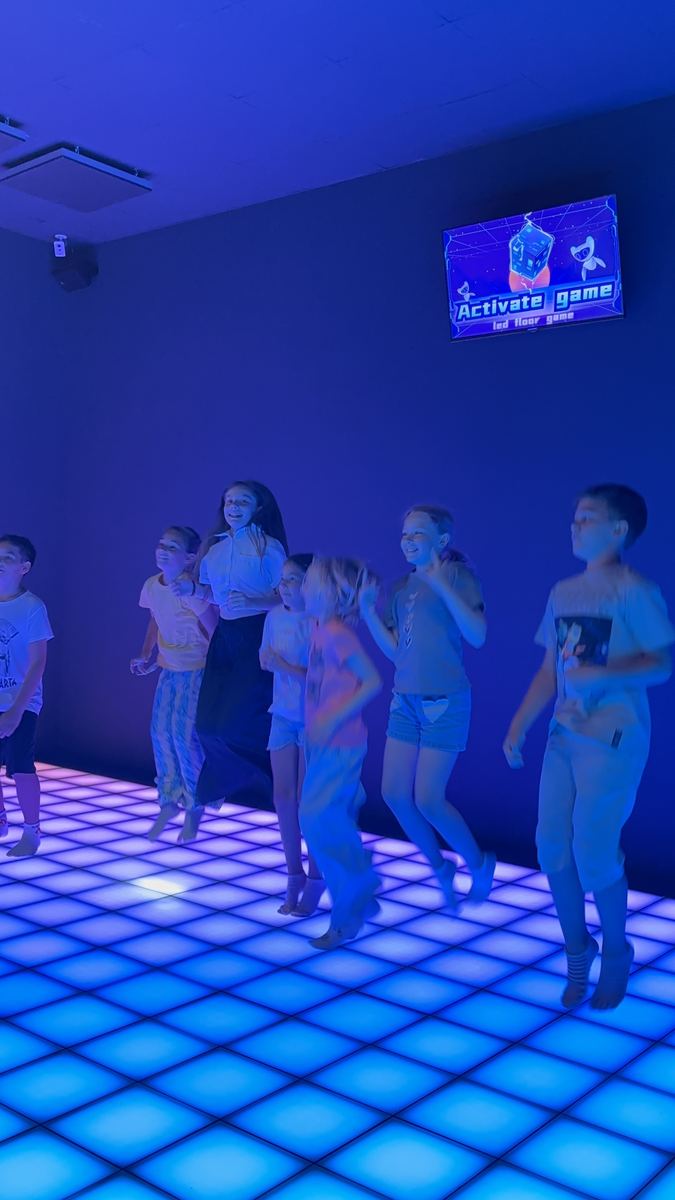
Capacity is the one technical detail worth understanding properly, because the price follows from it. A standard session runs from 2 up to 24 players, and the playing surface expands automatically with the group: up to 8 players use one floor, 9 to 16 players open a second, and 17 to 24 open a third. In practice a large team does not queue, it plays simultaneously across several surfaces. Above 24 people and up to 60, the event is built separately by phone.
The commercial model: up to 16 you book online, from 17 it goes through the phone
This is the difference that matters to an organiser, because it changes how long the event takes to arrange.
From 2 to 16 colleagues, you do not need a quote and you do not wait for a reply. Go to the booking page, pick the day, the time, one or two hours and the number of players, and the standard group price is calculated on the spot. It is the fastest way to run a small team event: book it on Monday morning for Thursday afternoon.
From 17 to 60 people, the event is arranged as a custom event by phone on +373 79 238 617. The reason is simple: at that size, questions come up that do not fit into a form, from how the teams are split and the order of the games to the food area, the company cake, or the exact time the group arrives. The company formats and what can be included are described on the team building page.
Real prices, per group and per person
A session is priced per group, not per individual ticket, and it depends on the slot. There are three bands: weekday daytime, the cheapest, weekday evening, and weekend. The table below covers one hour of play; the "per person" column is the total divided by exactly that headcount, not a starting price optimistically divided across a bigger group.
| Players | Weekday, daytime | Per person | Weekday, evening | Weekend |
|---|---|---|---|---|
| 2 | 300 MDL | 150 MDL | 400 MDL | 440 MDL |
| 4 | 600 MDL | 150 MDL | 800 MDL | 880 MDL |
| 8 | 1080 MDL | 135 MDL | 1440 MDL | 1600 MDL |
| 9 | 1250 MDL | 139 MDL | 1580 MDL | 1770 MDL |
| 12 | 1400 MDL | 117 MDL | 1760 MDL | 2040 MDL |
| 15 | 1550 MDL | 103 MDL | 1940 MDL | 2310 MDL |
| 16 | 1600 MDL | 100 MDL | 2000 MDL | 2400 MDL |
Two observations change how you budget. First: the cost per person falls steadily as the team grows, from 150 MDL at two people down to 100 MDL at sixteen, for the same hour on the same day. A bigger team is, per head, the cheaper option.
Second: the ninth player costs noticeably more than the eighth, because that is the person who opens the second floor. The total rises from 1080 to 1250 MDL and the cost per head briefly climbs from 135 to 139 MDL, after which it drops again and keeps dropping. If you are sitting on the line with eight or nine confirmed, it is worth knowing where the jump comes from.
A two-hour session costs 1.85 times the one-hour price. Twelve people pay 2590 MDL for two hours on a weekday daytime slot, roughly 216 MDL each, and sixteen pay 3700 MDL for two hours in the evening, about 231 MDL each. The full grid, with every band, is on the pricing page.
A worked example: a team of 16, Wednesday evening
Take an ordinary case. A department of sixteen wants two hours on Wednesday from 18:30, late enough for the colleagues who finish at 18:00.
- Two-hour session, weekday evening, 16 players: 3700 MDL.
- Sixteen pairs of anti-slip socks at 30 MDL each: 480 MDL.
- Total: 4180 MDL, roughly 261 MDL per person.
The same team, if it can play on Tuesday at 15:00, pays 2960 MDL for two hours, or 185 MDL per person before socks. The 740 MDL difference comes purely from the slot: same games, same duration, same floor. If the budget is tight, the hour is the first variable to negotiate internally, not the venue.
For a smaller team the maths is even simpler. Eight people, Tuesday at 15:00, one hour: 1080 MDL plus 240 MDL of socks, so 1320 MDL in total, or 165 MDL per person. That is the kind of event you can decide on in a morning.
If you also want a private area, food and cake
For an event that is not only play but also a meal, a company anniversary or an end-of-year party, the party packages fit better than a plain session. They run two hours, include both the LED floor and a separate celebration area, and carry a fixed price per group (Mon-Thu / Fri-Sun):
- Party, up to 8 guests: 3000 / 3500 MDL.
- Grand Party, up to 16 guests with a hard cap at 18: 5000 / 6000 MDL, plus 250 MDL for each guest above 16.
- Festival, up to 50 guests: 8000 MDL every day up to 24 guests; from 25, the whole arena, 9500 / 11000 MDL.
The packages have no age limit: adult teams book them as often as families do. For a department of twenty or thirty that also wants somewhere to sit, eat and cut a cake, Festival is usually the format people are looking for. Details are on the party page, and either route can add snacks, pizza, cake or an extra hour.
Small, medium and large budgets
Small budget. A one-hour weekday daytime session. It is the cheapest band of the week and, for a team of twelve to sixteen, the cost per person lands between 100 and 117 MDL. No food, no decoration, just play. It works surprisingly well as a long lunch break.
Medium budget. Two hours in the evening or at the weekend, socks for everyone and probably snacks. Most team events sit here: enough time to get through several games and for the quieter people to warm up, without losing half a working day.
Large budget. A package with a private area, food and cake, possibly followed by dinner at a restaurant nearby. For end-of-year events, where the whole department turns up with partners, this is the structure most often requested.
When active indoor is not the right answer
Worth saying plainly, because a badly matched event does more damage than no event.
If the event has a formal agenda, with a results presentation, speeches or awards, you need a room with chairs, a projector and sound. A playing floor does not replace that. The good version is to split them: the formal part in an event room, the relaxed part separately, in another part of the day.
If the team includes colleagues who cannot stand or run, a fully physical activity excludes them, however friendly the format. A hands-on workshop or a long table with a board game is fairer to them.
If the real goal is a strategy discussion, none of the above helps. You need an offsite day with a facilitator and an agenda, and the fun part belongs at the end as a reward, not as the main activity.
If the group goes beyond 60 people, the format no longer fits into a single active venue and has to be planned as an event with several zones running in parallel.
Checklist before you confirm any venue
- Real capacity, not stated capacity. Ask how many people play at once, not how many fit in the room. Those are two different numbers.
- Who runs the activity. If you want a facilitator to lead a structured debrief at the end, settle early whether you bring one or the venue has a solution.
- Food. Included, allowed from outside, or ordered separately? The answer moves the budget more than the activity itself does.
- The invoice. For a company, ask upfront how it is issued and what details are needed, so you do not find out at the end that you paid personally.
- Dress code and belongings. Tell the team if it is played in socks, whether comfortable clothes are needed and where bags are left.
- Cancellation and headcount changes. In a team of twenty, two or three people almost always drop out on the last day.
- Day and time first. Book the cheap slot before you send the calendar invite. Do it the other way round and you pay the weekend band for no reason.
If you are planning further ahead, keep reading: the team-building roundup, the large-group guide, the colleague get-together and how to run the end of year party.
Before you decide, see the score-based team games.
Frequently asked questions
What suits a team of 25 people?
At that size you leave online booking and move into custom event territory: call +373 79 238 617 and the programme is built around the group, including a food area if you want one. As a price reference, the Festival package, 2 hours of LED-floor games plus about 2 more hours in the private celebration area, costs 8000 MDL every day up to 24 guests, and for 25 to 50 guests, with the whole arena, 9500 MDL Monday to Thursday and 11000 MDL Friday to Sunday. The indoor alternatives at that size are bowling with several lanes booked at once or parallel escape rooms, but both split the team into groups that no longer interact.
How many colleagues can I book online for?
Up to 16. From 2 to 16 players you choose the day, the time and the duration on the booking page and the standard group price is calculated automatically. From 17 to 60 people the event is arranged by phone, because details of the programme come up that a form cannot handle.
How much does a session cost for a team of 16?
One hour on a weekday daytime slot costs 1600 MDL for 16 players, which is 100 MDL per person. The same hour in the evening is 2000 MDL, and at the weekend 2400 MDL. Two hours cost 1.85 times the one-hour price: 2960 MDL on a weekday daytime slot and 3700 MDL in the evening. Anti-slip socks, if needed, are 30 MDL a pair.
Can indoor team building run in winter or in the rain?
Yes, and that is the main advantage of indoor formats: the programme does not depend on the weather. Hai Pixel is open daily from 10:00 to 22:00 all year, so a booking made two weeks ahead needs no weather fallback.
How much of the day does it take?
A session lasts one or two hours. With arrival, changing and a few minutes of photos at the end, a one-hour event takes about ninety minutes out of the team's day, and a two-hour one fits comfortably into two and a half. That is exactly why the indoor format can be scheduled on an ordinary working day without sacrificing half of it.
Which indoor team building formats work in Chișinău?
An escape room works well for small teams of 2-6 but scales badly; bowling or billiards suit any age and level; and in the score games on the LED floor up to 24 colleagues play at the same time. For teams of 25-60, the event is arranged by phone.


