
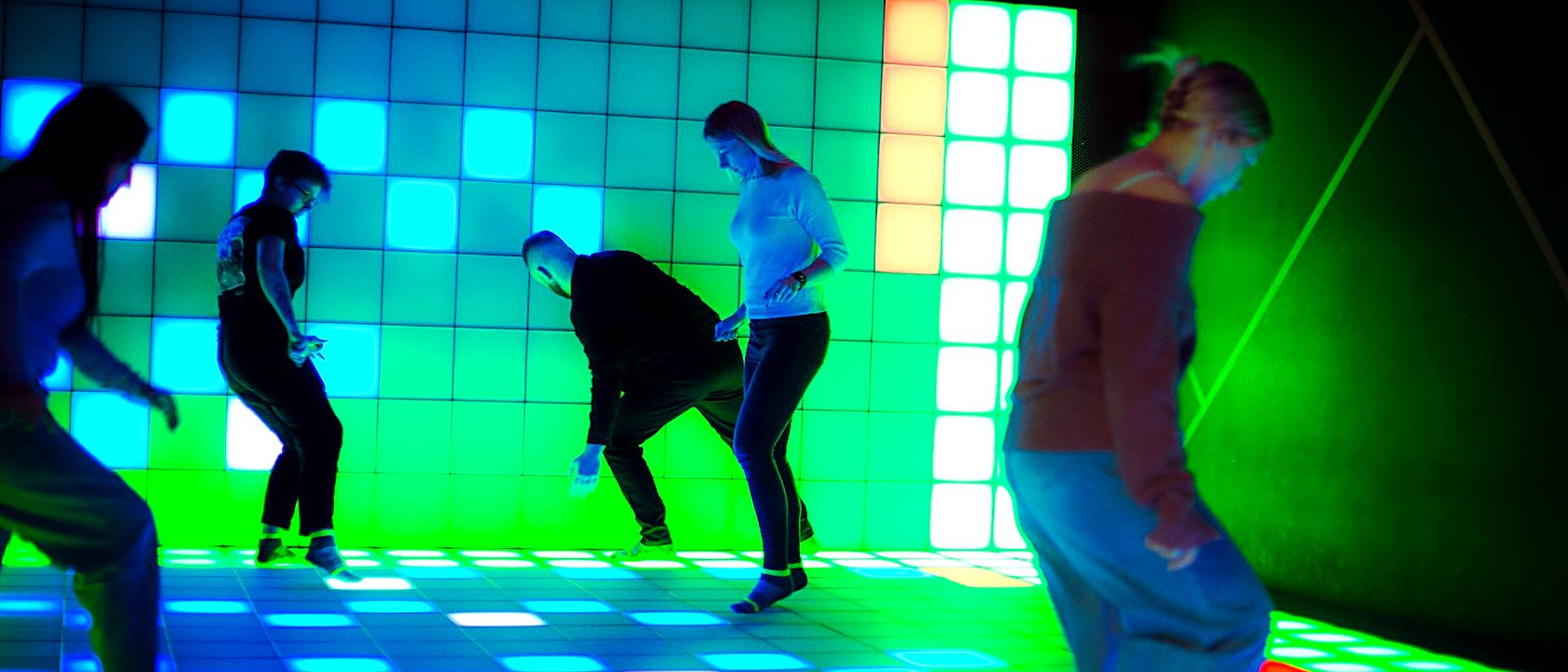
The most reliable formula for a class or colleague reunion in Chișinău is activity first, dinner after: a 2-hour session on the interactive LED floor at Hai Pixel for groups of 2-24 people, followed by dinner at a restaurant the group picks. In concrete numbers, 14 former classmates pay 4110 MDL for 2 hours on a Saturday, which works out to roughly 294 MDL per person. The games break the ice within minutes, so you arrive at dinner with fresh stories to tell, not just memories from 15 years ago.
Hai Pixel, the first interactive LED-floor venue in Chișinău, has been open since June 2026 at Grand Hall, bd. Constantin Negruzzi 2/4, 2nd floor, and holds a 5.0 rating on Google. The roughly 360 m² floor senses every step, runs 30+ games in rounds of 2-3 minutes, and shows live scores on the wall. This guide is about the occasion itself: how to organise a school, university or former-workplace reunion, how to pick a date the diaspora can actually make, and how to collect the money without becoming the class accountant. For the general logistics of big groups, we wrote a separate piece: what to do with a group of 10-24 people in Chișinău.
Why the restaurant-only reunion dies after the first hour
Anyone who has been to a classic reunion knows the script. The first hour is great: who works where, who lives where, photos of kids, laughing at old pictures. Then the update round ends and the table splits into little clusters: the people who already see each other keep talking to each other, the classmates who changed the most go quiet, phones appear on the table, and someone is already asking for the bill. Not because people stopped liking each other, but because the format works against them.
Three mechanisms kill these evenings. First: fixed seats. At a long table you realistically talk to two, at most four people, and they get chosen in the first seconds, when everyone sits down. Second: no shared present-tense experience. The only conversation material is the past, and the past runs out. Third: the silent comparison. The question "so what do you do these days?" is harmless for some and uncomfortable for others, and the ones it makes uncomfortable slowly withdraw from the conversation.
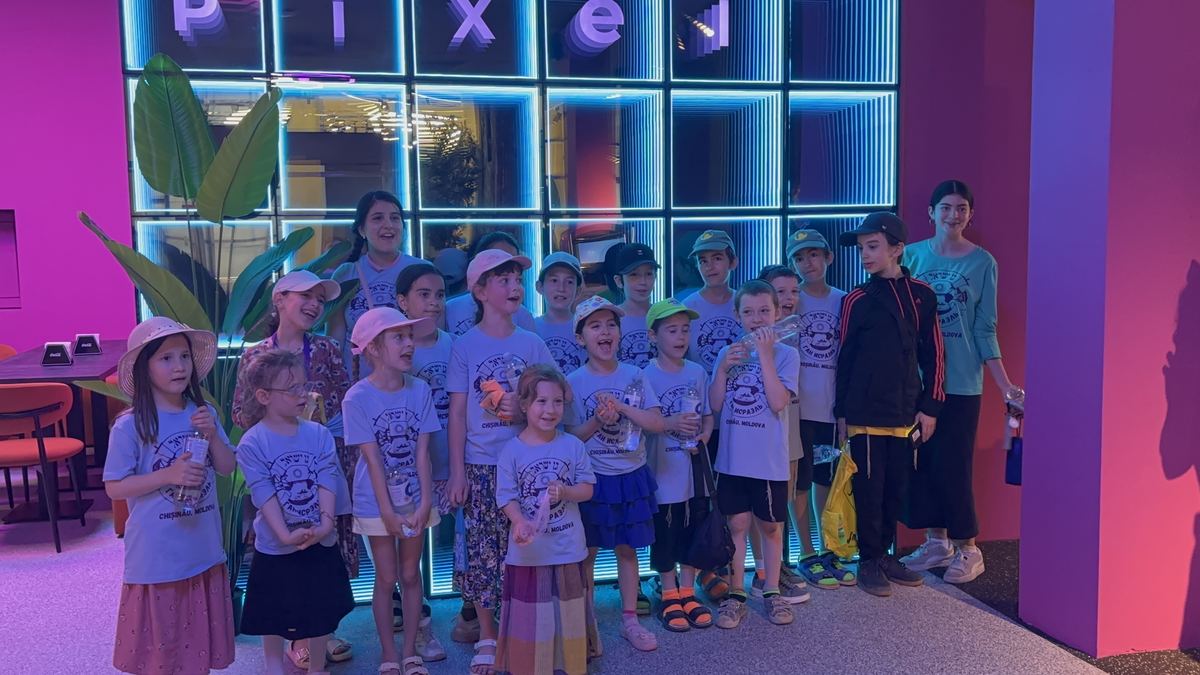
A shared activity solves all three at once. Nobody has a fixed seat: teams reshuffle every round. Present-tense conversation material appears: the moment the class president loses a reaction game to the quietest kid in class gets replayed for the rest of the evening. And laughter is a great equaliser: on the LED floor, your job title, your car and the city you ended up in do not matter, only who steps on the lit square first.
There is also a next-day effect. After an evening of talk alone, people leave with a vague sense that "it was nice". After an evening with games, the group leaves with concrete material: the leaderboard, the photos on the glowing floor, the clips of a round's finish. The class chat, dead for years, wakes up on its own the next morning, full of photos and promised rematches, and the next get-together no longer needs a champion: it proposes itself.
The activity-then-dinner formula, step by step
The order matters more than it seems. The version that works: meet at the activity venue, play for two hours, take the group photo, then go to dinner. The reverse version, dinner first and "maybe we go somewhere after", fails almost every time: after two hours at a table nobody wants to get up, and those who have been drinking are in no mood to move.
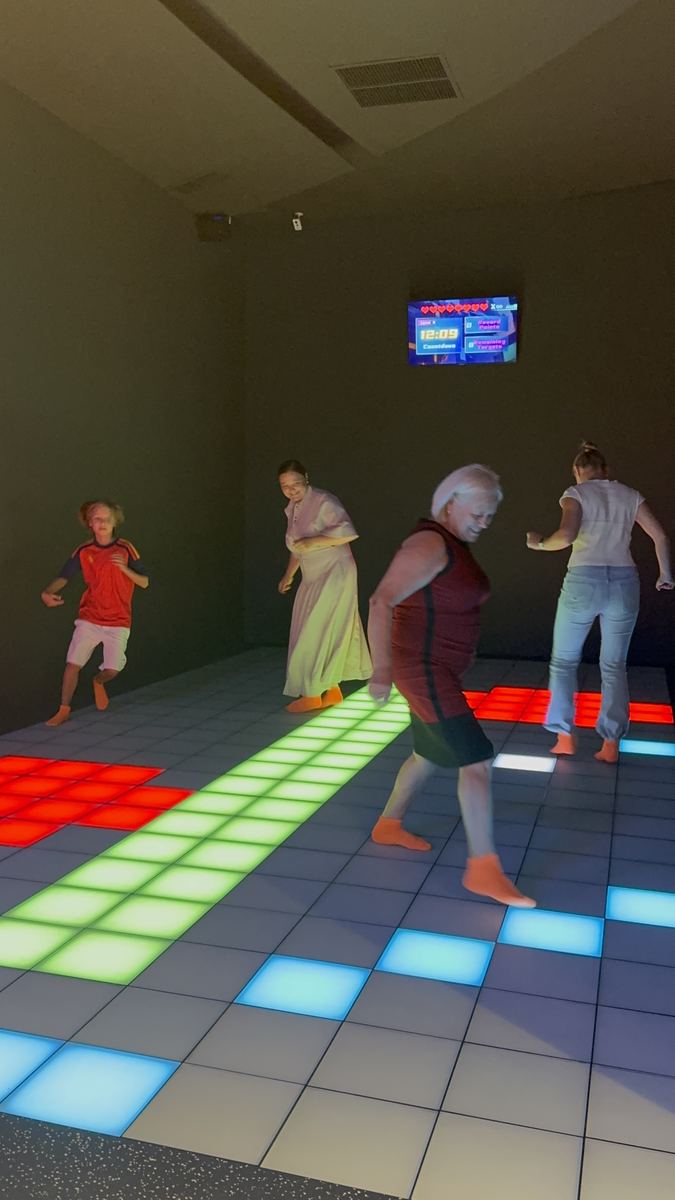
A realistic Saturday timeline looks like this. At 17:45, everyone gathers at Hai Pixel in Grand Hall, bd. Constantin Negruzzi 2/4, 2nd floor, right in the city centre. At 18:00 the 2-hour session starts: you rotate through a good share of the 30+ games in short rounds, with breaks whenever anyone wants one. At 20:00, the group photo at the neon wall. From 20:30, dinner at a restaurant in the centre, a few minutes away on foot. Latecomers break nothing: they join from the next round, with no awkward empty-chair moment at a dinner table.
A question that always comes up: do we invite partners? The practical rule: for the first reunion after many years, better just the class. Partners have no context for half the jokes, and the group instinctively splits into couples. The exception is reunions that have become a tradition, where the partners already know each other. Children change the format completely: if they come, pick a daytime slot and accept that conversations will happen on the run. The LED floor has no age limit, so the everyone-plus-kids version works; it just becomes a different kind of party.
| Format | What works | Main risk |
|---|---|---|
| Restaurant only | Long conversation, comfort, easy to organise | Dies after the first hour: clusters and phones |
| Activity + dinner | The game breaks the ice, dinner gets fresh material | Needs a bit more coordination from the organiser |
| Day trip out of town | A whole day together, strong memories | Hard to fit 20 calendars; eats an entire day |
| At someone's home | Low budget, intimate atmosphere | All the work lands on one person; limited space |
| Club or bar | Energy, music | You cannot talk; not everyone still enjoys the format |
For small groups of friends who already meet often, the rules are looser: we collected 12 ideas for going out with friends in Chișinău separately. A reunion plays in a different league, because the distance between people is bigger and the ice is thicker.
When should you schedule the reunion so the diaspora can make it?
In many Moldovan graduating classes, a serious share of the group lives abroad. A reunion planned for some random March gathers only the classmates who stayed. That is why the Moldovan reunion calendar has two clear peaks: August, when the diaspora comes home for holidays, weddings and family events, and the winter holidays, when the city fills up again between Christmas and Old New Year.
Practically, this means two things. One: choose the window first, the exact date second. A poll in the class chat asking "August or winter?" is more useful than ten specific date proposals. Two: inside those windows, book early. Everyone is organising something then: weddings, birthdays, other reunions. Weekend slots at good hours go first, and so do big restaurant tables.
| Period | Who is in town | Booking advice |
|---|---|---|
| August | Diaspora on holiday, students on break | Book a few weeks ahead; weekends go first |
| Winter holidays | Diaspora home between Christmas and Old New Year | Fix the date early, before family dinners fill the calendars |
| Easter | Short visits, calendars busy with family | Better for small meet-ups than the big reunion |
| Rest of the year | The classmates still in the country | Easiest to book; Mon-Thu 10:00-16:00 has the lowest rates |
Hai Pixel is open daily from 10:00 to 22:00, so during holiday periods, when nobody is at the office, an afternoon slot works too. For the diaspora, the most useful detail is that booking happens online, from anywhere: the classmate abroad can lock in the date and pay by card before landing.
How much does a Pixel session cost for 10-24 classmates?
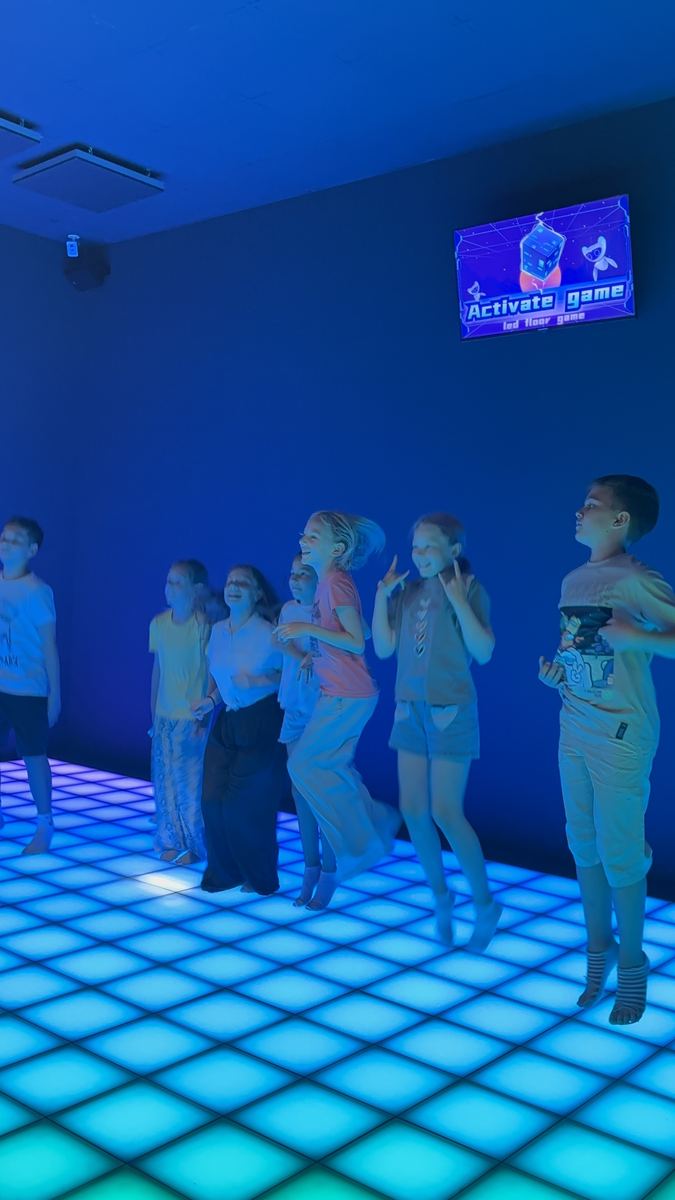
Pixel sessions are booked for 2-24 players, for 1 or 2 hours. Floors are assigned automatically by group size: up to 8 players fit on one floor, 9-16 get two, 17-24 get three, so even at 24 people everyone plays at the same time, in parallel teams. The price covers the whole group, not each person, and grows step by step with every extra player. There are three time bands: Monday-Thursday daytime (10:00-16:00), Monday-Thursday evening (16:00-22:00) and Friday-Sunday all day. Worth remembering: Friday is priced as weekend.
| Classmates | Mon-Thu 10:00-16:00, 2h | Mon-Thu 16:00-22:00, 2h | Fri-Sun, 2h |
|---|---|---|---|
| 10 | 2410 MDL | 3030 MDL | 3440 MDL |
| 12 | 2590 MDL | 3260 MDL | 3770 MDL |
| 14 | 2780 MDL | 3480 MDL | 4110 MDL |
| 16 | 2960 MDL | 3700 MDL | 4440 MDL |
| 18 | 3180 MDL | 4000 MDL | 4770 MDL |
| 20 | 3480 MDL | 4330 MDL | 5220 MDL |
| 24 | 4070 MDL | 5000 MDL | 6110 MDL |
A worked example with real numbers: you are 14 former classmates and you pick Saturday, 18:00-20:00. The weekend rate for 14 players over 2 hours is 4110 MDL in total. 4110 divided by 14 comes to roughly 294 MDL per person. Add the anti-slip socks at 30 MDL a pair and you land at about 324 MDL per person for the whole evening of play. The same session on a Tuesday evening costs 3480 MDL, around 249 MDL per person, if the whole group happens to be in town on a weekday.
For tighter budgets there is also the 1-hour session: 2220 MDL for 14 players on a weekend. Honestly though, two hours fly by at a reunion: the first hour goes on warming up and laughing, and the rematches only start in the second. All rates, including small groups, are on the pricing page, and you lock the date online on the booking page. If you are between 25 and 60 people, it becomes a custom event: call +373 79 238 617.
The organiser's playbook: from group-chat message to money collected
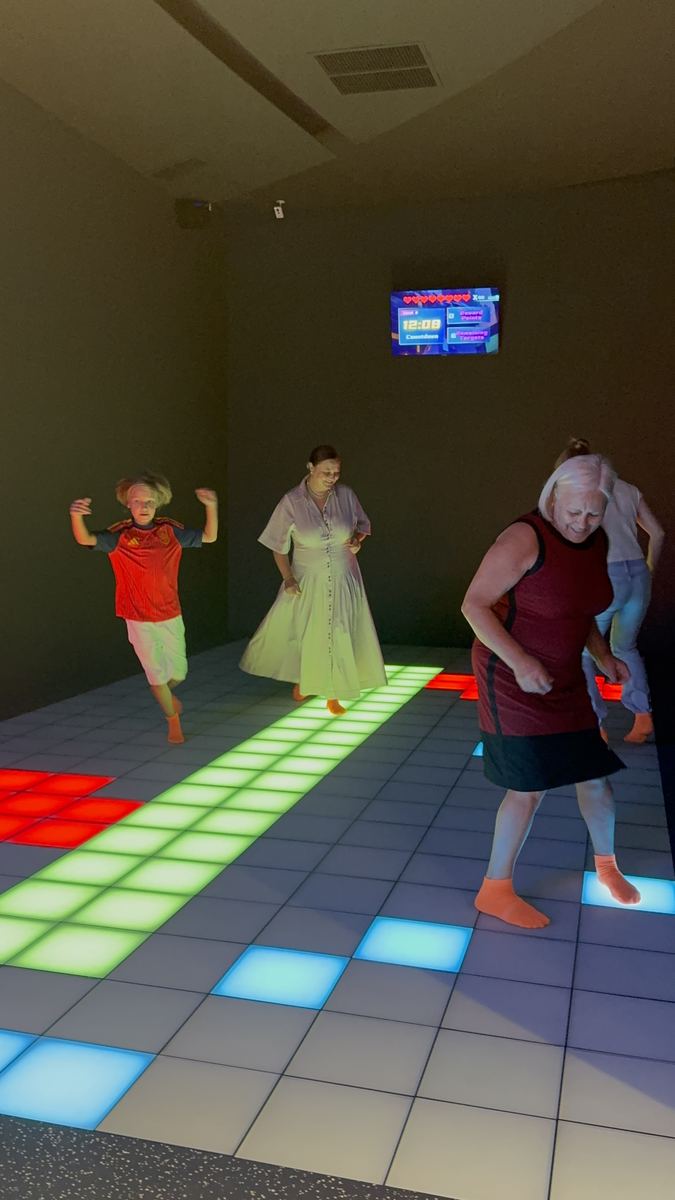
Reunions do not die from lack of interest; they die in the group chat, under dozens of "I can do any time" messages and no decision. The difference between a reunion that gets talked about and one that actually happens is a single person who takes the organiser role, plus, ideally, a backup who steps in if the first one gets buried at work.
- Choose the window, not the date. Start the poll with two big options: August or the winter holidays. Only after one wins, propose 2-3 concrete dates.
- Set a deadline. "Vote by Sunday" produces answers; a poll without a deadline stays open forever.
- Count realistically. Some of the people who vote "yes" will not make it. Confirm the list a week before and book for the confirmed number, not the dream number: the session price is calculated on the exact player count.
- Book the activity first, then the table. Evening and weekend slots go first in peak periods; a restaurant table is easier to find.
- Collect the money before, not after. Announce the per-person amount and ask for the transfer together with the confirmation. The organiser's old rule: those who paid show up.
- Keep a simple list. Who paid, who joins only for dinner, who brings the good camera.
- Close the evening with a decision. Group photo at the neon wall, then one sentence: "same time next year, August again". That is how a reunion becomes a tradition.
The restaurant leg needs just one extra phone call: reserve the table for the hour after the session and confirm the final headcount on the day. Pick a place within walking distance, so the group does not scatter on the way: ten minutes of walking together, with the adrenaline still fresh, is often where the best conversations happen.
Organiser arithmetic: at 20 people, the 2-hour weekend session costs 5220 MDL, which is 261 MDL per person. Ask everyone for 270 MDL and you keep a small buffer for socks or a lemonade for whoever arrives first. Transparency helps: post the screenshot of the price in the chat, so nobody wonders where the money went.
Different budgets, different fitness levels: keeping the whole group on board
Ten or fifteen years after graduation, incomes diverge enormously, and a reunion should not turn into a wallet contest. The advantage of a fixed-price activity is that the per-person amount is known in advance, to the leu: nobody opens a menu with fear, and nobody ends up splitting a bill inflated by other people's orders. Whoever is having a tight month can come just for the games; whoever only wants the stories can come straight to dinner: both count as full participation.
Fitness is the other unspoken worry: "I have not run since high school". The good news: rounds last 2-3 minutes, and between them you rest as long as you like. Everyone picks their own intensity: there are speed games, but also precision and memory games where attention wins, not sprinting. You play in socks, no special gear, and anyone who wants a longer break simply sits out a round and takes photos. With groups of 17-24, play splits across three floors in smaller teams, so nobody is pushed centre-stage against their will.
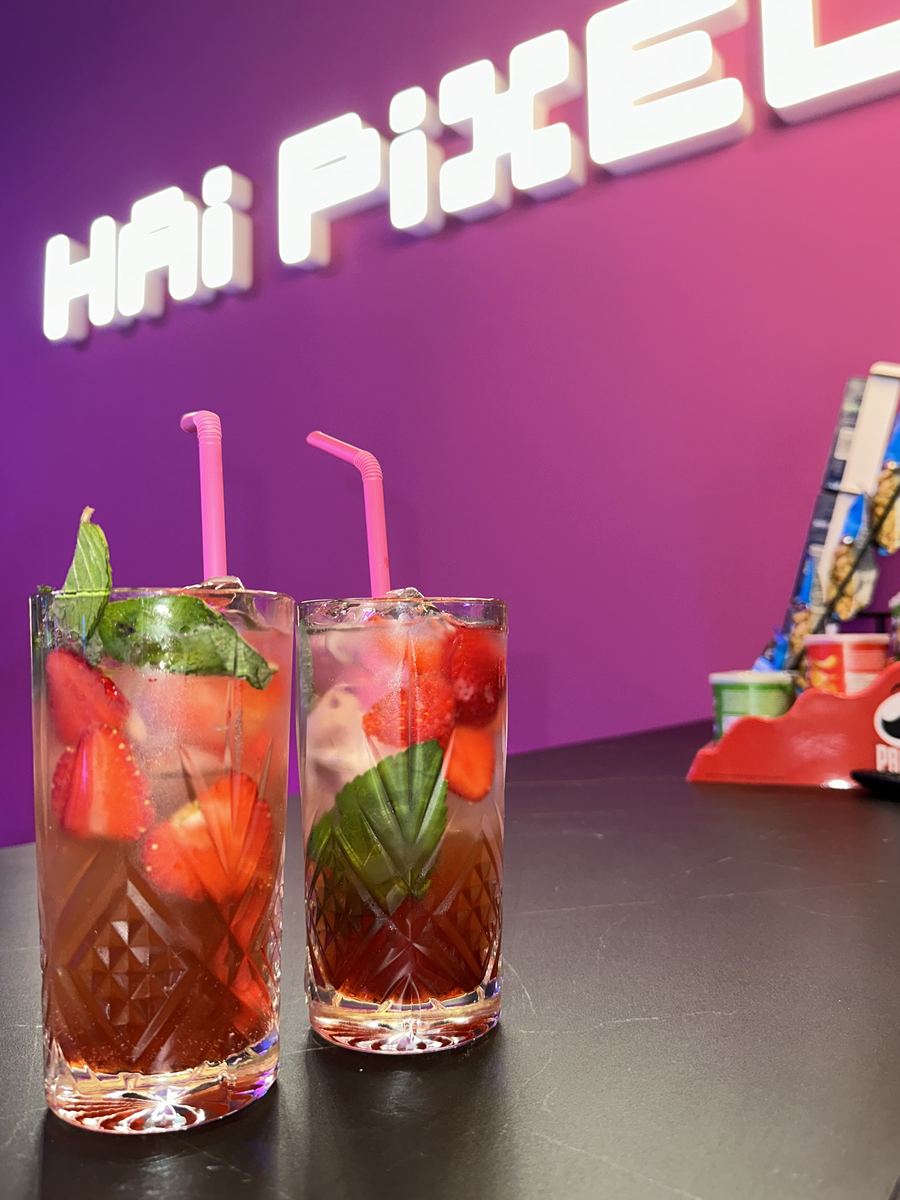
One detail that matters at reunions: the evening works completely without alcohol. The bar serves fresh lemonades and soft drinks, the classmates driving home do not feel left out, and whoever wants a glass of wine gets it at the dinner afterwards. To be honest though: the games are still movement games. If a significant part of your group has real mobility problems, the long unhurried dinner remains the better choice for you.
When is Hai Pixel NOT the right choice for your reunion?
The short answer: in five situations, stated plainly.
- You are more than 24 and insist on all playing at once. Online booking goes up to 24 players. Between 25 and 60 it becomes a custom event arranged by phone; above 60, look for an event hall.
- You are a small, close group that meets monthly anyway. If there is no ice, the game has nothing to break: a good dinner is enough. Sessions from 2 players up are still a fine regular outing, just not a reunion fix.
- The goal of the evening is long, quiet conversation. If your class wants three hours of stories around a table, go straight to a restaurant, or book only the 1-hour session as a warm-up.
- Several classmates have mobility problems. The games are movement-based; you can sit out any round, but if half the group would be watching from the side, choose another format.
- You are planning a full day out of town. The cellars at Cricova or Mileștii Mici and the landscapes of Orheiul Vechi are a whole-day programme; Pixel then works as the evening anchor, not the replacement.
And one special case: if the "former colleagues" are actually current colleagues and the company pays, the right format is team building, with teams, a leaderboard and company billing.
If you are planning further ahead, keep reading: the indoor team-building guide, the alcohol-free options, what fits between 18:00 and 22:00 and the winter company party guide.
Frequently asked questions about reunions at Hai Pixel
How many people can play at the same time at a reunion?
Online booking covers 2-24 players: up to 8 on one floor, 9-16 on two, 17-24 on three. Everyone plays in parallel; nobody waits on the sidelines. For 25-60 people it becomes a custom event: call +373 79 238 617.
How tiring is a session for someone out of shape?
Rounds last 2-3 minutes and everyone decides their own breaks. There are speed games, but also precision and memory games. You play in socks; anti-slip pairs cost 30 MDL. Anyone can skip a round and take photos instead.
Can classmates in the diaspora book from abroad?
Yes. Booking on the booking page happens online, with card payment, from anywhere. The site and the team speak Romanian, English and Russian, so partners from other countries manage without help.
How do we split the money fairly?
One organiser books and announces the fixed per-person amount. Example: 16 people, weekend, 2 hours comes to 4440 MDL, just under 280 MDL per person; ask for 280 MDL and the difference covers small extras. Collect the money before the event, by transfer.
Can we combine the session with cake or food?
A Pixel session does not include food; the recommended reunion format is games plus dinner in town. If you want cake and a private celebration area, there are the birthday packages, with no age limit, at a fixed price from 3000 MDL for 2 hours.
How do you organise a class reunion so it actually happens?
One person takes on the organiser role. Choose the window first, for example August or the winter holidays, then 2-3 concrete dates with a voting deadline. Confirm the list a week ahead and book for the confirmed number, because the session price is calculated per player. Book the activity first, then the table, and collect the money beforehand, not after.


