
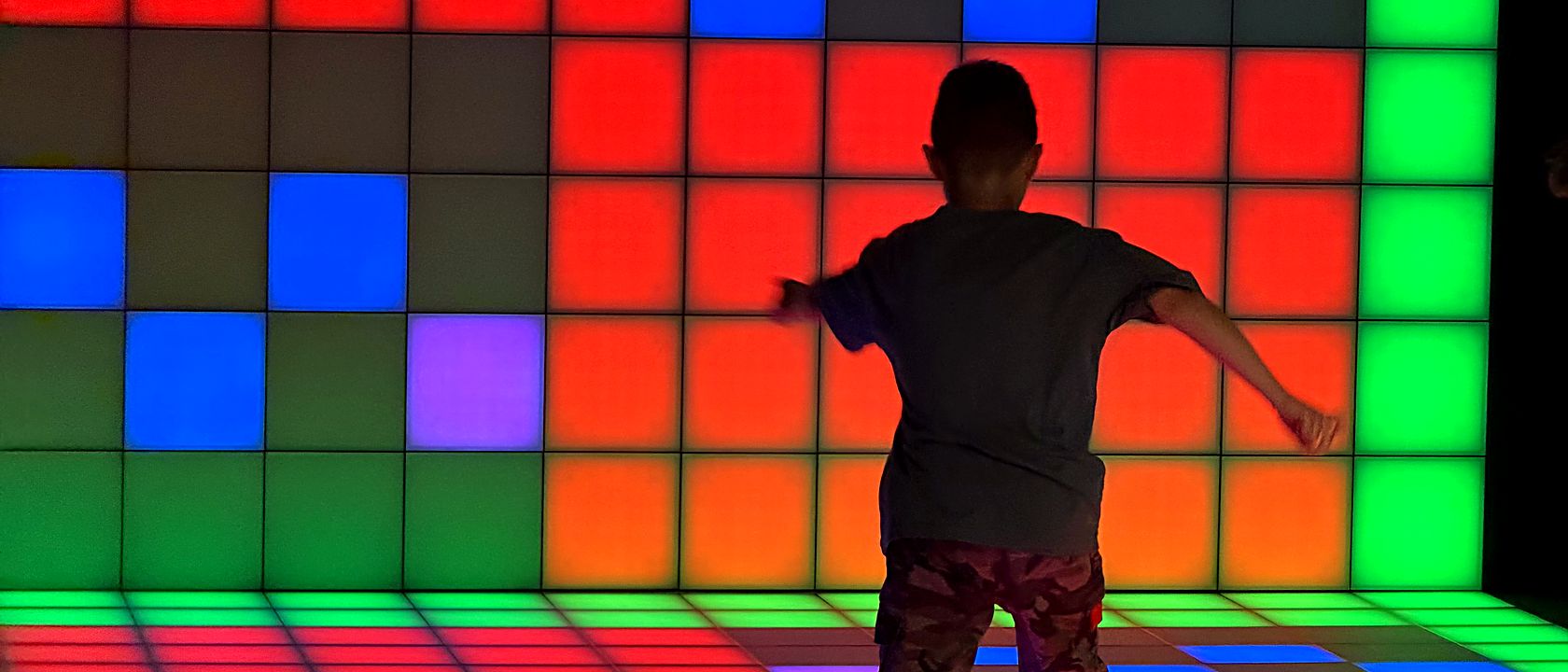
Podeaua LED interactivă este o suprafață luminoasă care simte presiunea: înțelege pe ce celulă ai călcat, schimbă instantaneu imaginea de sub picioare și transformă pașii în reguli, greșeli și puncte. La Hai Pixel, primul loc cu podea LED interactivă din Chișinău, asta înseamnă o sală de 360 m², peste 30 de jocuri de mișcare, runde de 2-3 minute, scor viu pe un perete LED și grupuri de la 2 până la 24 de jucători care joacă simultan. Cea mai scurtă explicație: este un teren de sport care își explică singur regulile și își numără singur punctele. Dacă stai pe loc, pe podea nu se întâmplă nimic.
Textul acesta este scris pentru omul care a văzut un clip pe rețele și nu a înțeles ce anume i se propune să rezerve. Mai jos afli din ce este făcută podeaua, ce se întâmplă minut cu minut într-o sesiune de o oră, ce se joacă pe ea, cui i se potrivește mai puțin și cât costă doar să încerci. Prețurile complete pentru fiecare mărime de grup sunt pe pagina de prețuri, lista jocurilor este pe pagina de jocuri, iar întrebările practice ale primei vizite sunt tratate separat în ghidul primei vizite.
Cum funcționează: o suprafață care citește presiunea
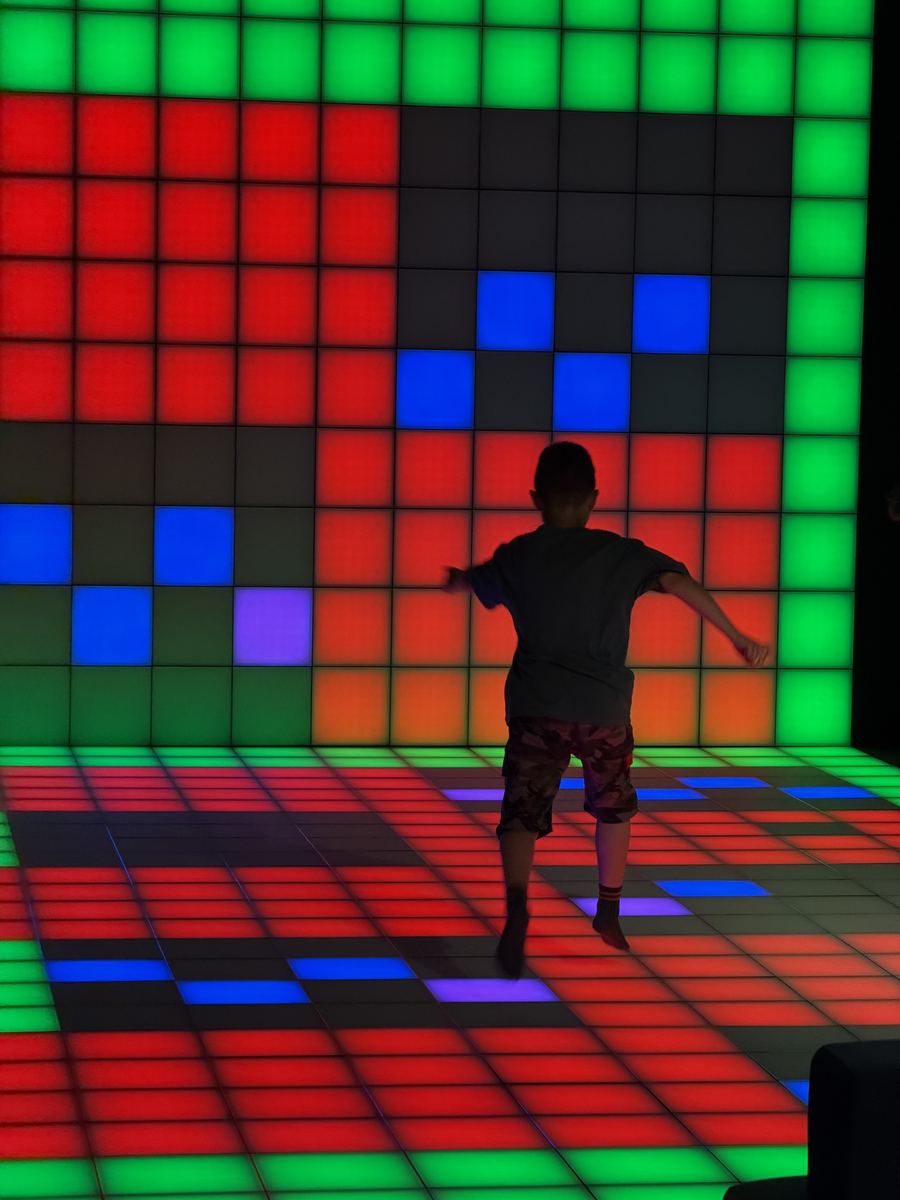
Sub picioare nu este o proiecție de sus și nici un ecran obișnuit sub sticlă, ci o suprafață cu LED-uri împărțită în celule pătrate. Fiecare celulă face două lucruri în același timp: se aprinde în orice culoare și înțelege că cineva a pășit pe ea. A doua capacitate este toată diferența față de orice altceva care luminează. Podeaua nu îți arată o imagine, ea citește reacția ta la imagine.
Mai departe intră în joc motorul de joc. El decide ce celule se aprind, în ce culoare, câte secunde rămân așa, ce se consideră pas corect și ce se consideră greșeală, și cum se transformă totul în puncte. Motorul este cel care face din suprafață un joc și nu un efect de lumină. Fără el ar fi doar o iluminare foarte scumpă.
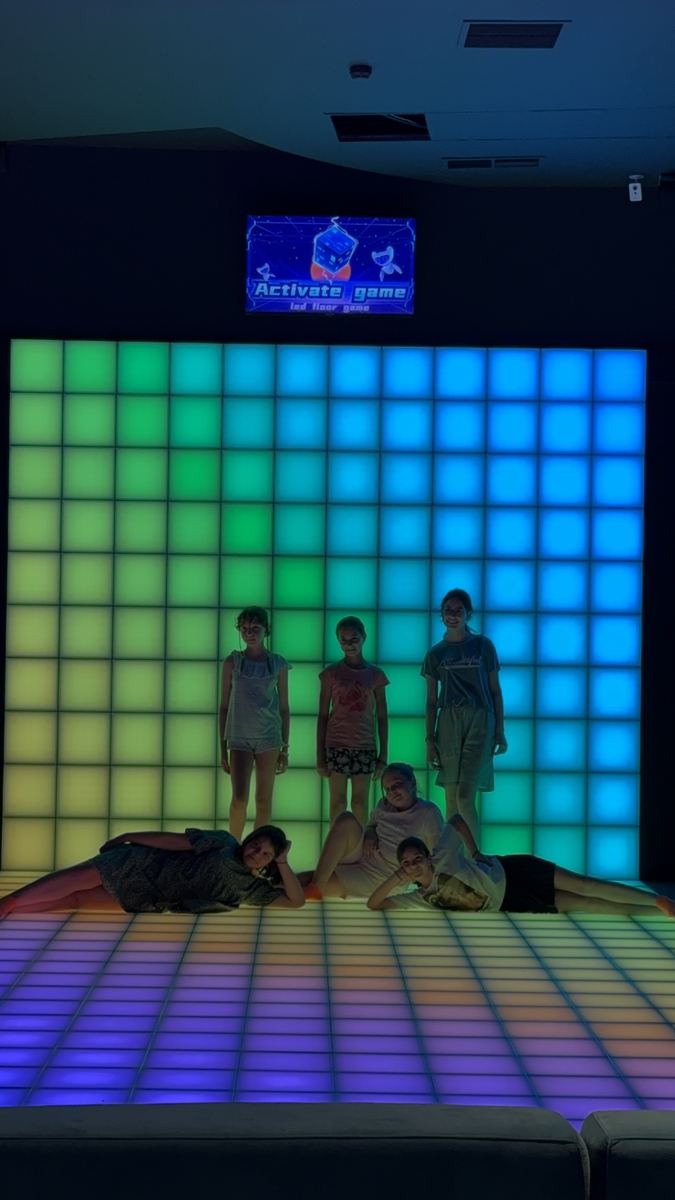
Al treilea element este peretele LED. Stă vertical și arată scorul pe parcursul rundei. Consecința practică este mai importantă decât cea tehnică: grupul vede tot timpul cine conduce, așa că lumea începe să joace serios din a doua rundă, deși a venit doar să se uite. Un scor viu pe perete funcționează mai bine decât orice explicație de reguli.
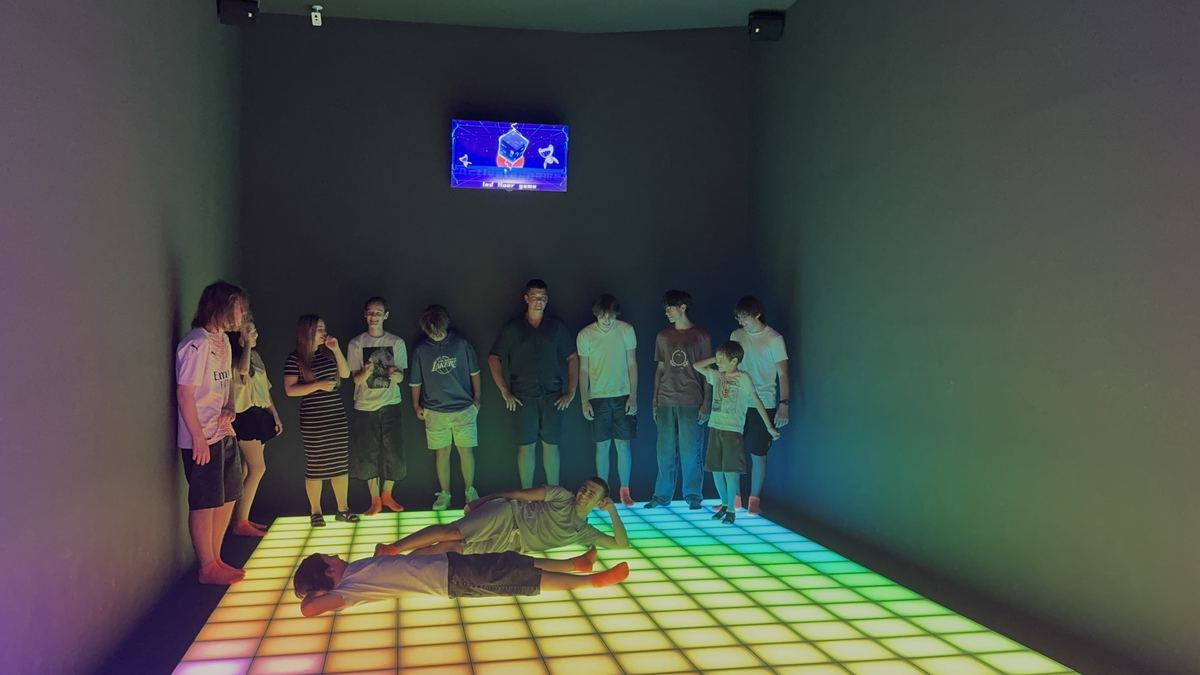
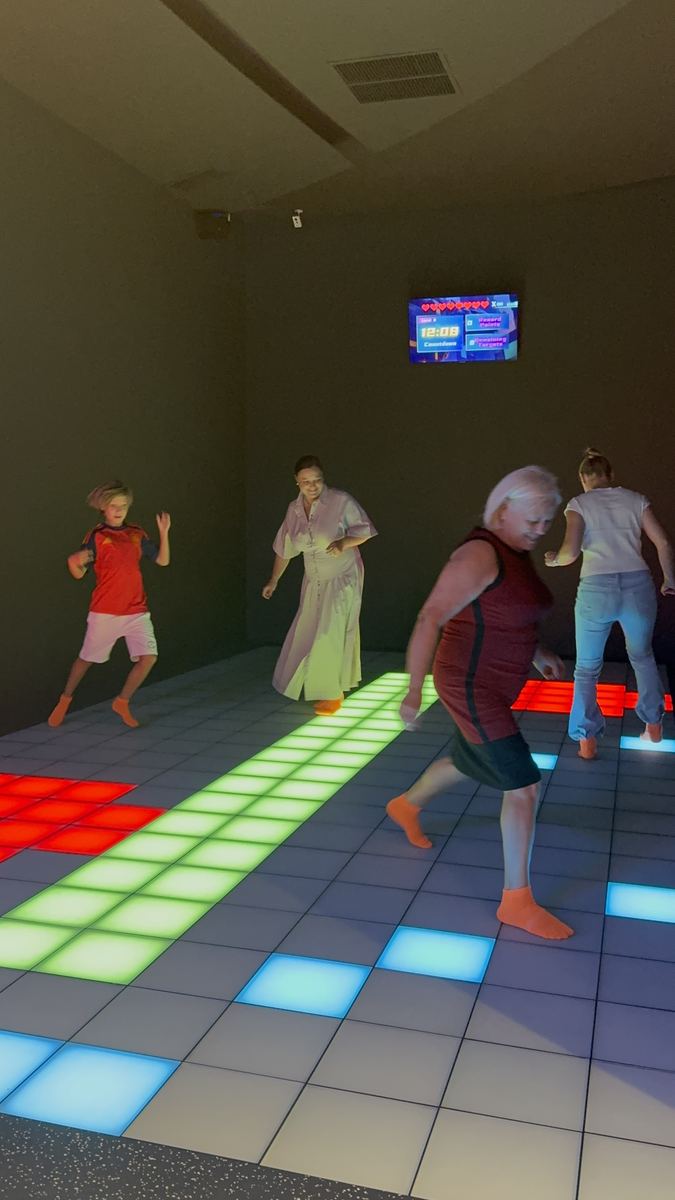
Sala are 360 m² și mai multe podele. Grupul se împarte pe ele după o regulă simplă: până la 8 jucători înseamnă o podea, între 9 și 16 înseamnă două podele, între 17 și 24 înseamnă trei. Regula nu ține de capacitate, ci de densitate. Opt oameni pe o podea au încă loc să ajungă fiecare la celula lui, doisprezece nu mai au. De aceea un grup mare nu stă la rând jumătate de sesiune, ci joacă integral, doar pe podele vecine.
Se joacă în șosete, încălțămintea rămâne la intrare. Șosetele antiderapante se vând pe loc, 30 MDL perechea, iar ale tale merg la fel de bine. Este singurul echipament necesar: fără căști, fără telecomenzi, fără aplicație pe telefon.
Ce nu este podeaua LED interactivă?
Jumătate din neînțelegeri apar pentru că omul pune în locul podelei interactive un format pe care îl cunoaște și pe urmă se miră. Cel mai ușor se explică prin negație, așa că iată lista onestă a lucrurilor care nu sunt.
| Formatul cunoscut | Prin ce se deosebește de podeaua interactivă |
|---|---|
| Casca VR | Fiecare jucător este în imaginea lui și nu îi vede pe ceilalți. Aici este invers: o singură suprafață comună sub picioare, toți se văd între ei și se ciocnesc fizic în același spațiu. |
| Parcul de trambuline | Activitate liberă, fără reguli, fără runde și fără rezultat. Podeaua dă mereu o sarcină și numără mereu punctele, deci timpul are structură. |
| Zona de joacă moale | Este gândită pentru cei foarte mici și pentru cățărat liber. Pe podea joacă grupuri de orice vârstă, inclusiv companii de adulți, și se joacă pe scor. |
| Camera de evadare | Un singur scenariu pentru toată ora, logică în principal statică, se parcurge o singură dată. Podeaua înseamnă zeci de runde scurte care se pot repeta și rejuca. |
| Ecran sau consolă | Nu ai ce privi. Podeaua reacționează la pas: cât timp nu te miști, jocul nu merge. Este mai aproape de sport decât de un joc video. |
| Lasertag sau paintball | Acolo ai nevoie de echipament, instructaj și teren. Aici ai nevoie de șosete, iar instrucțiunile dinaintea fiecărei runde încap în câteva propoziții. |
Mai este o așteptare care merită eliminată din start: nu este o atracție în care intri cinci minute să te uiți. O sesiune înseamnă timp rezervat pe o podea anume, cu un grup anume. Vii ca să joci, nu ca să treci pe lângă.
Cum decurge o oră pe podea: minut cu minut
Cea mai frecventă întrebare dinainte de rezervare sună așa: cu ce o să ne ocupăm o oră întreagă. Răspunsul se înțelege cel mai bine sub formă de cronologie, pentru că structura sesiunii este mereu aceeași, se schimbă doar jocurile.
| Minutul | Ce se întâmplă |
|---|---|
| 0-5 | Se scoate încălțămintea, se pun șosetele, grupul intră pe podea. Administratorul explică primul joc: regulile se formulează în două propoziții, pentru că mai departe le explică suprafața însăși. |
| 5-10 | Prima rundă, de încălzire. Este aproape întotdeauna simplă și există ca fiecare să calce o dată pe o celulă și să vadă că ea a reacționat. |
| 10-45 | Blocul principal. O rundă ține 2-3 minute, între runde este o pauză pentru explicații și apă, așa că în acest interval grupul apucă aproximativ zece jocuri diferite. Scorul de pe perete se actualizează la fiecare rundă. |
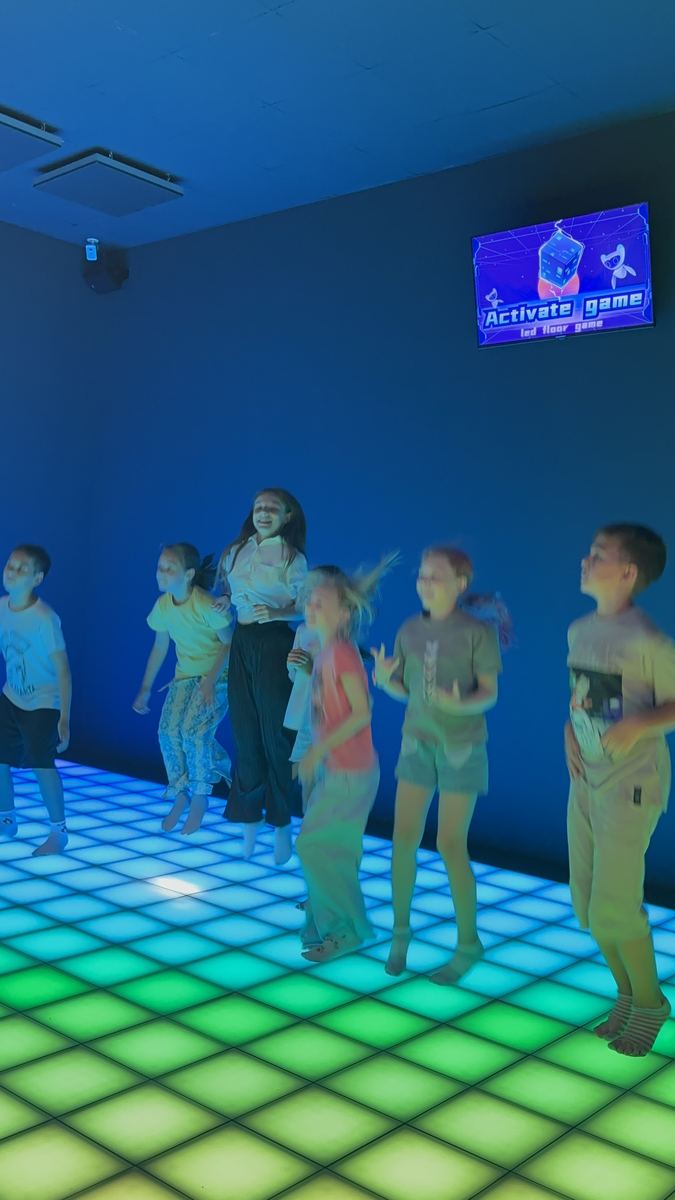
| 45-55 | Cele mai rapide jocuri. Grupul este deja încălzit, regulile se prind din zbor și exact aici ies cele mai bune filmări. |
| 55-60 | Runda finală și scorul general. Încălțăminte, apă, fotografii lângă perete. |
Din cronologie se vede lucrul principal: ora nu este o cursă lungă, ci o serie de curse scurte. Nimeni nu rezistă șaizeci de minute de alergare continuă și nimeni nu așteaptă asta de la grup. Efortul real seamănă cu un antrenament pe intervale: două minute repede, un minut de respirat, iar două minute repede.
Două ore funcționează la fel, doar cu mai multe blocuri. Dacă grupul este mare sau dacă este vorba de o aniversare, două ore se justifică de obicei, pentru că așezatul la masă, tortul și schimbatul iau mai mult timp decât pare. Dacă doar încerci formatul pentru prima dată, o oră este suficientă.
De ce o rundă durează doar 2-3 minute?
Runda scurtă nu este o limitare tehnică, ci decizia de construcție a întregului format. Din ea decurge aproape tot restul, așa că merită înțeleasă înainte de rezervare.
Primul motiv este fizic. Jocul pe podea înseamnă accelerări scurte și schimbări bruște de direcție, nu alergare pe linie dreaptă. În minutul trei respiră greu toată lumea, inclusiv cei care merg la sală. Runda se termină exact în momentul în care devine greu, iar asta se simte ca o oboseală bună, nu ca o epuizare.
Al doilea motiv: nimeni nu iese din joc pentru mult timp. Dacă un joc ține o oră și ai fost eliminat în minutul zece, stai cincizeci de minute lângă perete. Dacă runda ține două minute, cel mai rău lucru care ți se poate întâmpla este să aștepți o sută douăzeci de secunde până la următorul start. Pentru un grup mixt, cu adolescenți rapizi și adulți obosiți, asta rezolvă totul.
Al treilea motiv: regulile se învață din mers. Nimeni nu citește instrucțiuni. Administratorul spune două propoziții, tu calci pe o celulă, ea reacționează, iar regula devine clară. La această durată a rundei nu este grav să greșești din prima, pentru că peste două minute urmează următoarea.
Al patrulea motiv: varietate în loc de profunzime. Într-o oră grupul parcurge aproximativ zece jocuri diferite în loc de unul complicat. Este o experiență principial diferită de un joc de societate sau de un escape room: aici valoarea stă în comutare, nu în imersiune. Cine are nevoie de imersiune adâncă într-un singur scenariu are nevoie, sincer, de o cameră de evadare, nu de podea.
Al cincilea motiv: pauzele sunt integrate în format. Între runde există un punct natural în care poți bea apă, poți ieși, poți răspunde la telefon sau poți sări peste o rundă. Nu se strică nimic. În formatele cu un singur scenariu lung, acest punct nu există.
Ce se joacă pe podeaua interactivă?
Jocurile sunt peste treizeci, iar biblioteca se rotește, așa că este mai onest să descriem nu o listă de nume, ci ceea ce jocurile pun grupul să facă. La intrare nu ți se dă un meniu: administratorul se uită la grup, la vârsta, mărimea și energia lui, și alege singur ordinea. Nu este o formulare de marketing, ci exact felul în care decurge o sesiune.
| Tipul de joc | Ce face grupul efectiv | Exemple din rotație |
|---|---|---|
| Reacție și viteză | Podeaua dă un semnal, câștigă cine a reacționat și a ajuns pe celula corectă înaintea celorlalți. Cea mai simplă intrare pentru începători. | Who is First |
| Culoare și atenție | Sarcina se citește după culoare, nu după formă, și se rezolvă mai repede decât apuci să gândești. Merge foarte bine la grupuri cu vârste amestecate. | Color Madness |
| Mișcare și evitare | Zonele sigure și nesigure ale podelei se schimbă, iar grupul este tot timpul în mișcare. Categoria cea mai grea fizic. | Floor is Lava |
| Cooperativ | Grupul joacă împotriva podelei, nu unul împotriva altuia. Aici câștigă sau pierd toți deodată, și este cel mai bun mod de a apropia o companie de necunoscuți. | Eliminate the Grid |
| Echipă contra echipă | Două echipe adună puncte în același timp, iar scorul de pe perete se vede din ambele părți. Formatul pentru care vin grupurile de la serviciu. | Alege administratorul |
| Memorie și secvență | Podeaua arată un model sau o ordine, iar grupul o reproduce. Singura categorie în care cei mici îi bat constant pe cei mari. | Alege administratorul |
| Prinselea | Mecanica clasică, mutată pe o suprafață care ține scorul. Nu trebuie explicată nimănui, nici măcar celor care au venit prima dată. | Alege administratorul |
Numele din a treia coloană sunt exemple din rotație, nu o listă completă și nici o promisiune că exact acelea le vei juca. Regulile precise ale fiecărui joc se explică pe loc, înainte de rundă, iar așa este mai corect decât să le citești dinainte: jumătate din reguli devin clare de la primul pas.
O consecință practică importantă: are puțin sens să ceri dinainte un joc anume. Are sens, în schimb, să îi spui administratorului că grupul vrea mai multe runde pe echipe sau, dimpotrivă, mai multe runde cooperative. Asta chiar funcționează.
Cui i se potrivește mai puțin podeaua interactivă?
Aici este important să spunem direct, nu să ascundem la subsol. Podeaua funcționează prin presiune: înregistrează pasul atunci când cineva calcă suficient de apăsat pe celulă. De aici decurg limite reale, iar despre ele este mai bine să afli înainte de rezervare decât la fața locului.
Un copil foarte ușor. Un copil mic, ușor, care calcă moale, poate apăsa celulele inconstant: o parte din pași se înregistrează, o parte nu. Tehnic este pe podea, dar jocul nu îl vede de fiecare dată, iar pentru un copil de trei ani asta arată ca o nedreptate. Se va bucura oricum de lumină și de alergat, dar partea competitivă nu va funcționa pentru el.
Un copil purtat în brațe. Dacă un adult poartă copilul pe podea, pașii îi face adultul. Podeaua vede un singur jucător, nu doi, iar copilul rămâne spectator în brațele cuiva care aleargă. Ca mod de a petrece timpul este în regulă, dar nu este un joc pentru el.
O persoană în scaun cu rotile. Roțile distribuie greutatea altfel decât un pas, iar jocurile sunt construite pe deplasare rapidă între celule. Experiența va fi vizibil mai săracă decât a restului grupului. În plus, sala se află la etajul 2. Dacă în grupul vostru este cineva în scaun cu rotile, sunați înainte la +373 79 238 617 și întrebați despre acces și despre ce se poate realist, în loc să rezervați în orb.
Cineva care nu vrea să se miște. Podeaua nu se privește. Dacă omul a venit să stea jos, va sta în zona alăturată, dar nu are sens să plătiți pentru el ca pentru un jucător. În orice grup există unul, iar asta este normal: pur și simplu nu îl număra la rezervare.
O accidentare recentă la genunchi sau la gleznă. Formatul este construit pe schimbări bruște de direcție. Dacă doare ceva, este mai bine să sari peste sau să te limitezi la rundele liniștite.
Și un refuz onest: dacă ai nevoie de un loc liniștit, în care grupul stă și vorbește, nu este acesta. Pe podea este zgomot, lumină și lume care aleargă timp de o oră. Pentru o discuție lungă la masă există alte formate, iar noi o spunem direct dacă sunați și descrieți ce vă trebuie.
Cât costă doar să încerci
Sesiunea se plătește pe grup, nu pe persoană, iar prețul depinde de trei lucruri: câți sunteți, în ce zi și la ce oră, o oră sau două. Mai jos este aritmetica reală a unei prime încercări, cu tot cu șosete, pentru că numărul de la casă trebuie să coincidă cu numărul la care te așteptai. Șosetele sunt socotite la 30 MDL perechea, în varianta în care le cumperi pe loc și nu vii cu ale tale.
| Cine și când | Sesiune 1 oră | Șosete | Total | Pe persoană |
|---|---|---|---|---|
| 2 persoane, luni-joi până la 16:00 | 300 MDL | 60 MDL | 360 MDL | 180 MDL |
| 4 persoane, luni-joi până la 16:00 | 600 MDL | 120 MDL | 720 MDL | 180 MDL |
| 2 persoane, în weekend | 440 MDL | 60 MDL | 500 MDL | 250 MDL |
| 10 persoane, luni-joi după 16:00 | 1640 MDL | 300 MDL | 1940 MDL | 194 MDL |
| 24 de persoane, în weekend | 3300 MDL | 720 MDL | 4020 MDL | 167.50 MDL |
Din tabel se vede un adevăr care nu ne avantajează: în doi, în weekend, plătiți cel mai prost preț pe persoană din tot catalogul, 250 MDL cu tot cu șosete. Același format în patru, într-o zi de luni până joi până la 16:00, costă 180 MDL de persoană, iar în grup de 24 de oameni în weekend costă 167.50 MDL. Prețul sesiunii crește cu fiecare jucător, dar crește mai încet decât numărul de oameni, deci un grup mare iese întotdeauna mai bine la calculul pe cap de om. Dacă sunteți doi și bugetul contează, veniți luni-joi până la 16:00 sau așteptați până se strânge o companie.
A doua oră costă mai puțin decât prima. Patru persoane luni-joi până la 16:00 plătesc 600 MDL pentru o oră și 1110 MDL pentru două, adică ora a doua iese 510 MDL în loc de 600. Cu șosete, două ore pentru patru oameni înseamnă 1230 MDL, adică 307.50 MDL de persoană. Tabelul complet pentru toate mărimile de grup și toate zilele este pe pagina de prețuri.
Ce merită știut înainte de prima vizită
Adresa: Grand Hall, bd. Constantin Negruzzi 2/4, etajul 2, Chișinău. Program zilnic, 10:00-22:00. Telefon +373 79 238 617, echipa vorbește română, rusă și engleză. Nota pe Google este 5.0, iar locul s-a deschis în iunie 2026.
Îmbrăcămintea trebuie să permită alergarea: ținută sportivă sau pur și simplu lejeră. Tocurile, blugii strâmți și rochiile nu funcționează, iar asta se vede din prima rundă. Încălțămintea se scoate, șosetele sunt obligatorii.
Rezervarea în avans este puternic recomandată: numărul de podele este limitat, iar la orele căutate se poate să nu mai fie timp liber. Poți rezerva în câteva minute pe pagina de rezervări. Restul întrebărilor practice, inclusiv parcarea, ora la care e bine să ajungi și unde stau cei care nu joacă, sunt detaliate în ghidul primei vizite.
Formate în afara sesiunii obișnuite: aniversări cu preț fix pe grup, team building și grupuri de la 25 până la 60 de persoane, care se organizează la telefon. Pachetele de aniversare nu au limită de vârstă, se iau și pentru adulți.
Dacă plănuiești mai departe, continuă cu peretele LED interactiv, ce se întâmplă la fiecare vârstă pe podea și prețul pe oră, pe grup și pe persoană.
Întrebări frecvente
Ce este podeaua LED interactivă, pe scurt?
Este o suprafață luminoasă care înțelege unde ai călcat și transformă pașii într-un joc cu scor. Podeaua arată sarcina, tu o rezolvi cu picioarele, iar rezultatul se vede imediat pe perete. Fără ochelari, fără telecomenzi și fără aplicații: doar tu, șosetele și celulele de sub picioare.
Este un joc pentru copii sau joacă și adulții?
Joacă ambele categorii, iar grupurile de adulți vin constant: echipe de la serviciu, companii de prieteni, cupluri. Pachetele nu au limită de vârstă. Diferența stă doar în alegerea jocurilor: unui grup de adulți administratorul îi dă mai multe runde pe echipe și mai multe runde competitive.
Trebuie să te pricepi la jocuri video?
Nu, și este unul dintre puținele formate în care experiența de gaming chiar nu ajută. Ajută atenția și viteza de reacție, nu orele jucate. De aceea, într-un grup mixt, adulții și copiii sunt aproximativ pe picior de egalitate, iar la jocurile de memorie cei mici câștigă des.
De câți oameni este nevoie ca să fie interesant?
Se poate juca de la 2 persoane, dar jocurile competitive prind viață pe la patru, iar cele pe echipe de la șase. Maximul pentru o sesiune obișnuită este de 24 de jucători pe trei podele, iar toți joacă simultan. Grupurile de la 25 până la 60 de persoane se organizează separat, la telefon.
Cu ce te îmbraci și ai nevoie de șosete speciale?
Haine lejere, în care nu îți pare rău să alergi. Încălțămintea se scoate la intrare, se joacă în șosete. Șosetele antiderapante se vând pe loc, 30 MDL perechea, iar ale tale sunt binevenite dacă vrei să economisești.
Unde poți încerca o podea interactivă în Moldova?
La Hai Pixel, în Chișinău: Grand Hall (Sportlandia, etajul 2), bd. Constantin Negruzzi 2/4, deschis zilnic 10:00-22:00. Sala are podele LED sensibile la presiune, peste 30 de jocuri de mișcare și un perete LED interactiv; o oră pentru 2 jucători costă de la 300 MDL.


